AI Replaced My Marketing Team: Smart Move or Shortsighted?

Written by Elias Oender
August 5, 2026 3 min read
The quick answer
Replacing an entire marketing team with AI can drive short-term growth, but it’s rarely sustainable. AI excels at scaling repetitive tasks but struggles with nuanced creativity and strategic thinking. Smart marketers use AI to augment, not replace, human expertise. Over-automation risks losing the empathy and adaptability that drive long-term success.
Can AI Replace Your Marketing Team?
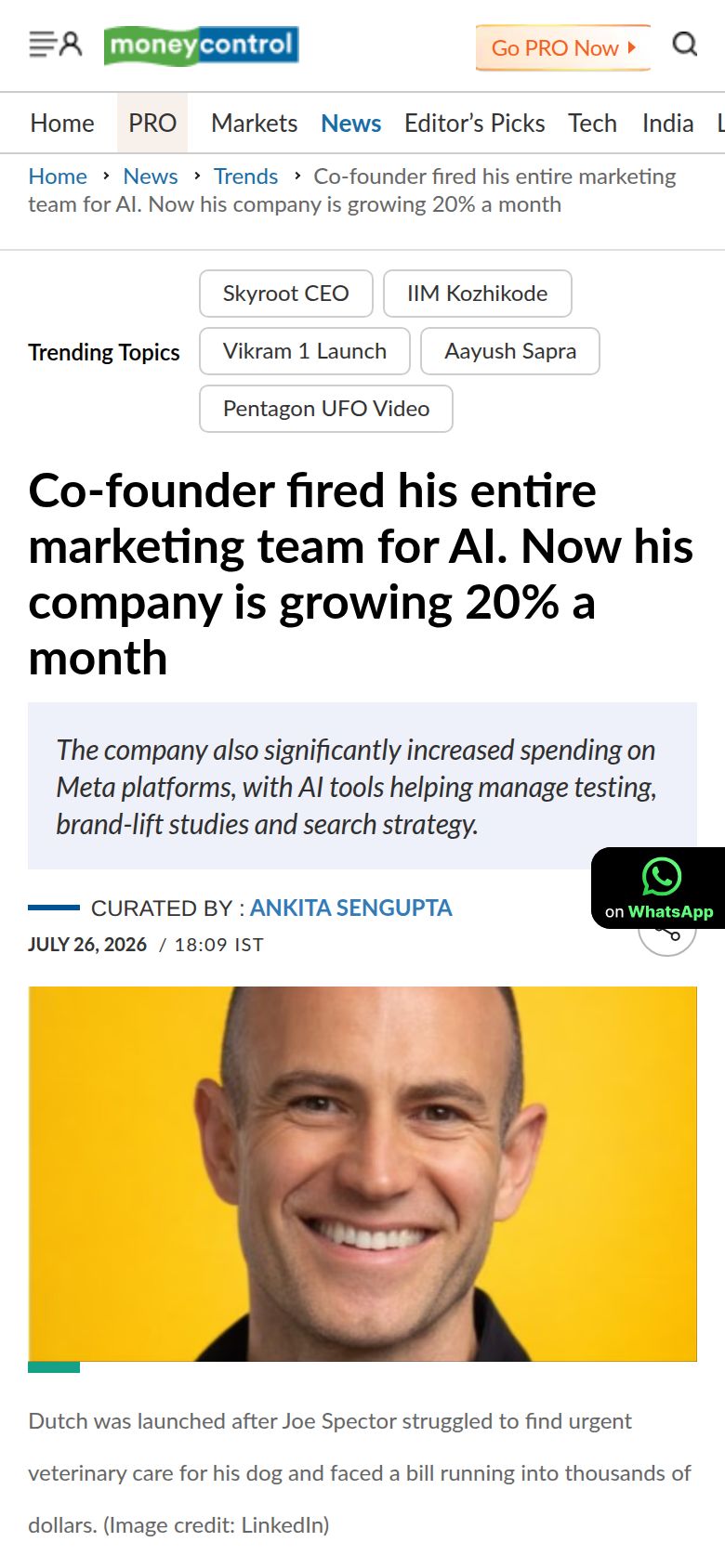
The story is everywhere: a co-founder fired his entire marketing team and replaced them with AI. Now, his company is growing 20% a month. Sounds like a dream, right? Not so fast. While AI can handle repetitive tasks like ad optimization and content scaling, it struggles with the creativity and empathy that drive long-term success. As one report notes, this approach often works in the short term but falters when campaigns need nuance or adaptability.
What AI Does Well (And What It Doesn’t)
AI excels at scaling repetitive tasks. For example, it can generate thousands of ad variations or analyze performance data faster than any human. But it falls short in areas requiring deep creativity or strategic thinking. A campaign that resonates emotionally or aligns perfectly with cultural trends still needs a human touch. As Hacker News points out, AI can’t replicate the empathy and intuition that make marketing truly effective.
The Risks of Over-Automation
Firing your entire marketing team for AI is a gamble. While it might cut costs and boost short-term growth, it risks losing the creativity and adaptability that drive long-term success. Generic campaigns and missed opportunities become more likely when everything is automated. Instead of replacing your team, use AI to augment their skills. For example, AI can handle ad scaling while your team focuses on strategy and storytelling. Run a free scan to see where automation could help, and where it might hurt.
The Smart Way Forward
The best marketers use AI as a tool, not a replacement. Think of it like a calculator: it’s great for crunching numbers, but it still needs a mathematician to guide it. By combining AI’s efficiency with human creativity, you can scale your campaigns without losing authenticity. Want to learn more? Book a call to discuss how to balance automation and human insight in your marketing strategy.
The Hidden Costs of Full Automation
When you replace your marketing team with AI, you’re not just losing creativity. You’re also losing the ability to course-correct quickly. AI follows patterns and algorithms, but it can’t pivot when something unexpected happens. A human team can spot a trend, adjust messaging, or even halt a campaign that’s going off the rails. AI? It’ll keep running the same playbook, even if it’s no longer working.
Another cost is brand erosion. AI-generated content often lacks personality. It’s generic, safe, and forgettable. Over time, this can dilute your brand’s voice and make it harder to stand out. Your audience might not notice immediately, but they’ll feel the difference. They’ll stop connecting with your message, and that’s when retention drops.
Finally, there’s the issue of data interpretation. AI can analyze numbers faster than any human, but it can’t tell you why something is happening. It might flag a spike in clicks, but it won’t know if it’s because your ad resonated or because it accidentally offended someone. Without human insight, you risk misreading the data and making costly mistakes.
How to Use AI Without Losing Your Edge
The key is to augment, not replace. Here’s how:
- Delegate repetitive tasks: Use AI for ad scaling, A/B testing, and data crunching. Free up your team to focus on strategy and creativity.
- Layer in human oversight: Always have a human review AI-generated content before it goes live. This ensures it aligns with your brand voice and avoids potential pitfalls.
- Test and iterate: Run small experiments with AI-driven campaigns. Measure the results, learn from them, and refine your approach.
- Invest in training: Teach your team how to work with AI tools. The more they understand the technology, the more effectively they can leverage it.
AI is a powerful tool, but it’s not a silver bullet. The companies that succeed with AI are the ones that use it to enhance their human teams, not replace them. Balance is everything.