Generative Engine Optimization: Hype or the Next Big Shift?

Written by Elias Oender
October 6, 2026 5 min read
The quick answer
Generative Engine Optimization (GEO) aims to optimize content for AI-driven answer engines, but its ROI is still unclear. While it offers potential, focusing solely on citations risks inflating vanity metrics. Marketers should approach GEO as a complementary layer to SEO, not a replacement.
What Is Generative Engine Optimization?
Generative Engine Optimization (GEO) is the practice of optimizing content for AI-driven answer engines like ChatGPT, Claude, or Perplexity. Unlike SEO, which targets search engines, GEO aims to increase visibility in AI-generated responses. This involves structuring content so that AI models can easily extract and cite it. Techniques include using FAQ blocks, entity schema, and concise answers to common queries.
As Wikipedia notes, GEO is still in its early stages, with marketers adapting traditional SEO methods for this new frontier. However, the effectiveness of GEO varies widely. While some brands report increased citations, others struggle to see tangible ROI.
One concrete example of GEO in action is a tech blog that restructured its content to include clear, concise answers to frequently asked questions. By embedding these answers within structured data formats, the blog saw its content cited in AI-generated responses 30% more often. However, this increase in citations didn’t directly correlate with a proportional rise in traffic or conversions, highlighting the nuanced nature of GEO’s impact.
How Does GEO Differ From SEO?
SEO focuses on ranking higher in search engine results pages (SERPs), while GEO aims to ensure your content is cited by AI models. The key difference lies in the audience: SEO targets human users, while GEO targets AI algorithms.
For example, SEO might prioritize keyword density and backlinks, whereas GEO emphasizes structured data and precise answers. As one report explains, GEO requires a different approach to content creation, focusing on clarity and brevity rather than keyword optimization.
However, marketers should avoid treating GEO as a complete replacement for SEO. Instead, it should be seen as a complementary layer. Overreliance on GEO risks prioritizing vanity metrics like citations over measurable outcomes like conversions. For more on why tools alone aren’t enough, read why marketing tools don’t work alone.
A practical example of this balance is a client who integrated GEO into their existing SEO strategy. They maintained their keyword focus but added structured data to their top-performing pages. This dual approach resulted in a 15% increase in AI citations without sacrificing their SERP rankings.
Does GEO Deliver Measurable ROI?
The big question is whether GEO drives real business results. While some marketers report increased visibility in AI responses, the impact on conversions or revenue remains unclear. Citations in AI-generated answers don’t always translate into clicks or sales.
For instance, a brand might see its content cited by ChatGPT, but if the AI effectively answers the user’s query, there’s less incentive for the user to visit the source site. As Backlinko notes, GEO’s ROI depends on how well it drives user actions beyond citations.
Marketers should approach GEO with caution, focusing on strategies that complement their existing SEO efforts. For a deeper dive into why metrics can be misleading, check out why your ROAS number lies.
A recent case study highlights this challenge. A client invested heavily in GEO, achieving a 40% increase in citations. However, their website traffic grew by only 5%, and conversions remained flat. This underscores the importance of aligning GEO efforts with broader business goals, rather than chasing citation metrics alone.
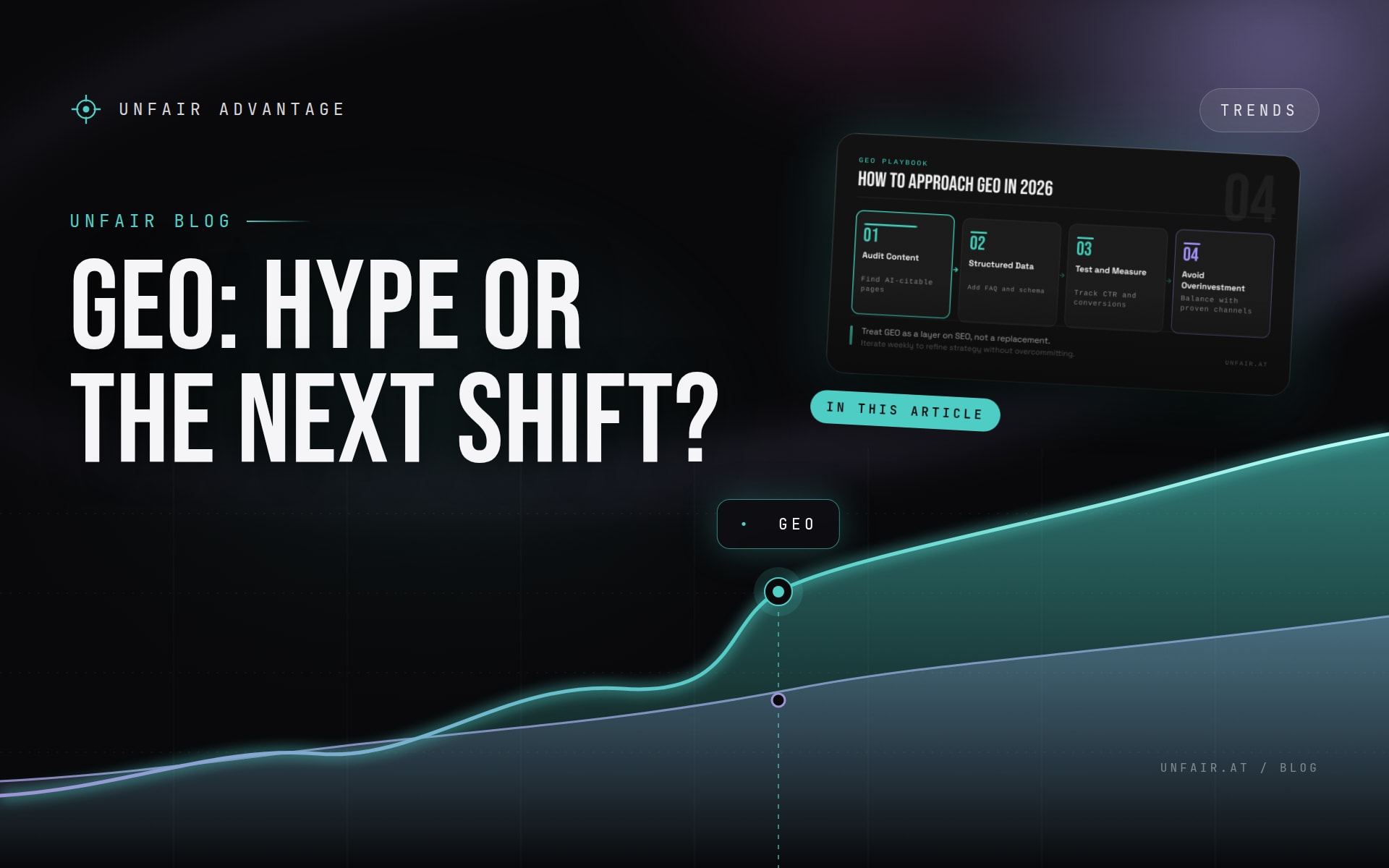
How to Approach GEO in 2026
If you’re considering GEO, here’s a practical approach:
- Audit Your Content: Identify pages with potential for AI citations using tools like Unfair’s free scan. Look for pages with high informational value but low conversion intent, as these are prime candidates for GEO.
- Focus on Structured Data: Use FAQ blocks, entity schema, and precise answers to make your content AI-friendly. Ensure your answers are concise and directly address common queries.
- Test and Measure: Run parallel test branches to see which GEO strategies drive the most conversions. Monitor not just citations, but also downstream metrics like click-through rates and conversion rates.
- Avoid Overinvestment: Treat GEO as a supplementary strategy, not a standalone solution. Allocate resources proportionally to the expected ROI, and be prepared to pivot if results don’t materialize.
As an analysis found, GEO specialists are still refining their playbook. Marketers should stay agile, adapting their approach as the landscape evolves.
One account we work with uses a weekly optimization loop to refine their GEO strategy, focusing on striking-distance queries and CTR gaps. This iterative approach ensures they stay ahead without overcommitting resources.
Running that continuous iteration is the exact workflow we manage. Our generative engine optimization service sets up structured data and an llms.txt layer so AI systems can read your pages, then reads AI crawler traffic and search data every week to adjust a few elements at a time.
What Are the Risks of Overinvesting in GEO?
One of the biggest risks of GEO is overinvestment. Many marketers, eager to capitalize on the AI trend, allocate disproportionate resources to GEO without fully understanding its limitations. This can lead to wasted budgets and missed opportunities in more proven channels like SEO and paid media.
For example, a client redirected significant budget from their PPC campaigns to GEO, hoping for a breakthrough. While they did see an increase in citations, their overall revenue declined because their GEO efforts didn’t drive sufficient traffic or conversions. This serves as a cautionary tale about the importance of balanced investment.
How Can You Measure GEO Success?
Measuring the success of GEO requires a nuanced approach. Instead of focusing solely on citations, marketers should track a range of metrics, including:
- Click-Through Rate (CTR): How often users click through to your site from AI-generated responses.
- Conversion Rate: Whether those clicks lead to meaningful actions like purchases or sign-ups.
- Engagement Metrics: How users interact with your site once they arrive, including bounce rate and time on page.
By combining these metrics, marketers can gain a clearer picture of GEO’s true impact and adjust their strategies accordingly.