Why Google Ads API’s AI Upgrade Risks Alienating Non-Technical Marketers

Written by Elias Oender
September 1, 2026 4 min read
The quick answer
Google Ads API Developer Assistant’s AI agent upgrade aims to streamline workflows for developers, but risks alienating non-technical marketers who rely on intuitive interfaces and clear documentation. The new version forces users to reinstall and adapt to a more technical setup, potentially increasing complexity rather than reducing it. While the upgrade may benefit advanced users, it highlights a gap in accessibility for everyday marketers.
What is the Google Ads API Developer Assistant’s AI Upgrade?
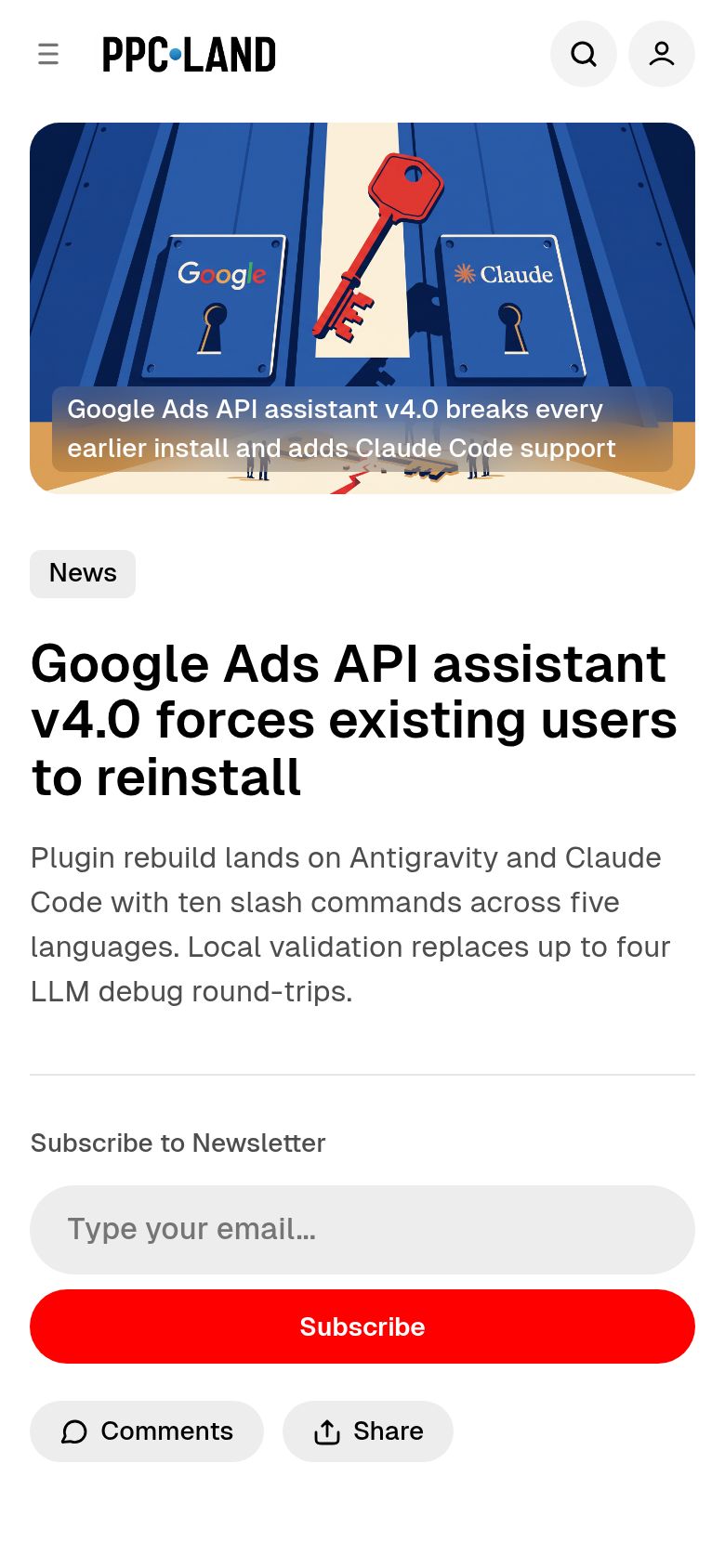
The Google Ads API Developer Assistant recently underwent a major AI agent upgrade, transforming it into a global AI-powered coding plugin. According to Search Engine Land, this update aims to streamline workflows for developers by automating complex tasks. However, the upgrade forces existing users to reinstall, as highlighted by PPC Land. While this may sound promising, it raises questions about accessibility for non-technical marketers.
This upgrade is part of Google’s broader push to integrate AI into its ecosystem, following trends like ChatGPT and Bard. The AI agent can now generate code snippets, debug errors, and even suggest optimizations based on historical data. However, these features are deeply technical, requiring a solid understanding of coding and APIs to leverage effectively. For marketers without this background, the upgrade feels more like a barrier than a breakthrough.
Who Stands to Benefit Most?
Advanced users and developers are the primary beneficiaries of this upgrade. The new AI agent can handle intricate coding tasks, making it a powerful tool for those who are already comfortable with technical workflows. For example, developers can now automate repetitive tasks like campaign creation, bid adjustments, and performance monitoring. This saves time and reduces the risk of human error.
However, as discussed in our post on why marketing tools don’t work alone, tools like this often fail to deliver without the right context or expertise. For everyday marketers, the upgrade might feel more like a hindrance than a help. Without technical knowledge, they may struggle to understand or utilize these advanced features, leaving them reliant on developers or external consultants.
Why Might This Alienate Non-Technical Marketers?
Non-technical marketers rely on intuitive interfaces and clear documentation to navigate complex tools. The AI upgrade shifts focus toward technical users, potentially leaving non-technical users behind. As one Reddit thread points out, many marketers are already frustrated with the steep learning curve of Google Ads tools. This upgrade could exacerbate those frustrations, creating more complexity rather than simplifying workflows.
For instance, a marketer used to managing campaigns through Google Ads’ user interface may now need to understand API endpoints, JSON payloads, and debugging logs. This additional technical burden could deter marketers from adopting the tool altogether. While Google has positioned the upgrade as a way to democratize access to advanced features, it risks doing the opposite by alienating its core user base.
What’s Missing in the Upgrade?
The upgrade lacks a balanced approach that caters to both technical and non-technical users. While it introduces powerful new features, it does little to improve accessibility or user-friendliness for marketers who aren’t developers. As we’ve argued in why AI marketing tools need human operators, tools should enhance human capabilities, not replace them or make them harder to use. This upgrade feels like a step backward in that regard.
One missing piece is comprehensive onboarding and training resources. While Google offers some documentation, it’s often geared toward developers rather than marketers. A series of tutorials or step-by-step guides tailored to non-technical users could bridge this gap. Additionally, Google could introduce a simplified interface that abstracts away the technical complexity, allowing marketers to leverage AI capabilities without needing to write code.
How Does This Impact Agencies and Small Teams?
For agencies and small teams, the upgrade could create a divide between technical and non-technical members. Larger agencies with dedicated developer teams may benefit from the AI agent’s capabilities, using it to streamline operations and improve efficiency. However, smaller teams without technical expertise may struggle to adapt, potentially falling behind competitors who can leverage the tool effectively.
This disparity highlights the importance of investing in training and upskilling. Agencies that equip their teams with technical knowledge will be better positioned to take advantage of the upgrade. Conversely, those that rely solely on non-technical marketers may find themselves at a disadvantage, unable to unlock the full potential of the Google Ads API Developer Assistant.
What Should Marketers Do Next?
If you’re a non-technical marketer, it’s essential to evaluate whether this upgrade aligns with your needs. Consider running a free scan to see how your current setup performs and whether this upgrade might complicate your workflows. For those struggling with the technical aspects, booking a call with experts can provide clarity and guidance. Remember, tools are only as good as the strategy behind them, as we’ve discussed in why your ROAS number lies in 2026.
For marketers with technical skills, this upgrade presents an opportunity to enhance efficiency and explore new possibilities. Experiment with the AI agent’s features and consider how they can be integrated into your existing workflows. However, keep in mind that AI is a tool, not a replacement for human creativity and strategic thinking.
In conclusion, while the Google Ads API Developer Assistant’s AI agent upgrade offers exciting possibilities for developers, it risks alienating non-technical marketers. A more balanced approach that considers all users would ensure that this tool truly simplifies workflows for everyone.