Google's Gemini Ads: AI Hype or Performance Boost?

Written by Elias Oender
July 8, 2026 1 min read
The quick answer
Google's Gemini-powered ad formats aim to revolutionize search ads with AI, but marketers should scrutinize whether these tools truly improve performance or just deepen Google's ecosystem dependence. While conversational ads and Direct Offers look flashy, the real question is whether they drive incremental conversions. Performance marketers must test rigorously and avoid over-relying on Google's proprietary tech.
What are Google’s Gemini-powered ad formats?
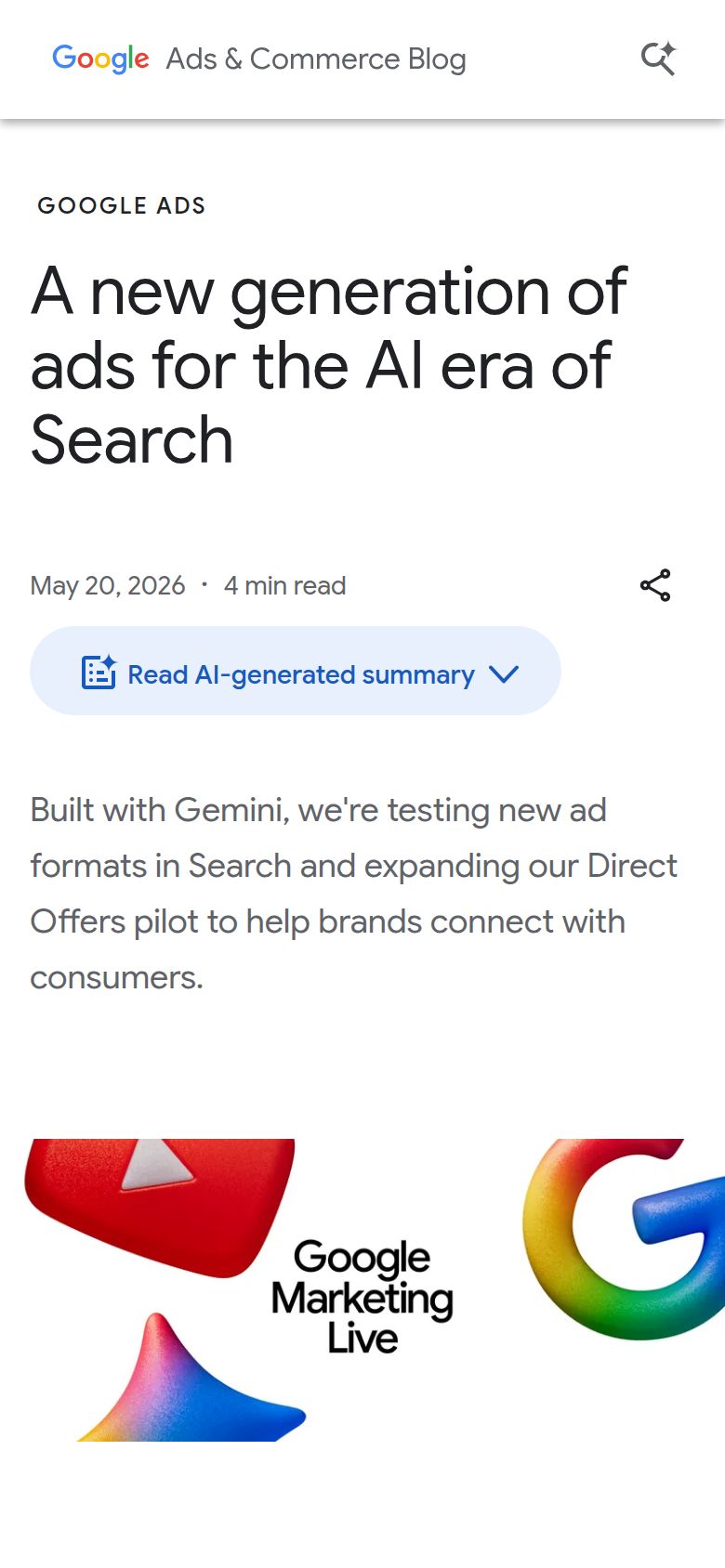
Google’s Gemini-powered ad formats aim to revolutionize search ads by using AI to make them more conversational and contextual. These include ads that answer user queries directly and Direct Offers that surface deals in AI Mode. As Google’s blog explains, the goal is to make ads more interactive and relevant. But while this sounds innovative, marketers should ask: does this actually improve performance, or is it just a shiny new wrapper?
Do Gemini ads actually improve performance?
The short answer: it’s too early to tell. While Gemini ads may boost engagement, their impact on core metrics like conversions and ROI remains unproven. As one report notes, these formats are still in pilot stages. Marketers should avoid jumping on the bandwagon without rigorous testing to measure real incremental gains. Remember, flashy tools don’t always translate to better results.
Are Gemini ads a lock-in tactic?
Yes, Gemini ads rely heavily on Google’s proprietary AI and ecosystem, making it harder for marketers to diversify their ad strategies. As covered here, these formats are designed to work seamlessly within Google’s platform, potentially deepening dependence. Marketers should balance innovation with caution, ensuring they don’t become overly reliant on a single ecosystem. As always, diversification is key to resilience.
What’s the bottom line?
Google’s Gemini-powered ad formats are undeniably innovative, but marketers must approach them with skepticism. Test rigorously, measure true performance, and avoid over-relying on Google’s proprietary tech. If you’re unsure where to start, book a call to discuss how these tools fit into your broader strategy.