Marketing Trends 2026: What Actually Works

Written by Elias Oender
August 10, 2026 7 min read
The quick answer
In 2026, marketing trends like personalized AI, localized campaigns, and incremental testing are driving ROI. However, many hyped trends fail to deliver. This article explores what actually works, backed by data and real-world examples, helping marketers focus on strategies that move the needle.
What Are the Most Effective Marketing Trends in 2026?
In 2026, marketing is more data-driven than ever. Personalized AI, localized campaigns, and incremental testing are leading the charge. According to Deloitte Digital, brands leveraging AI for hyper-personalization are seeing a 20-30% increase in engagement. But not all trends are created equal. Many hyped strategies, like VR-based campaigns, are failing to deliver ROI.
This shift is driven by the increasing availability of first-party data and advanced AI tools that can process it effectively. Brands are now able to move beyond broad demographic targeting and focus on individual preferences and behaviors. For example, a luxury fashion brand might use AI to tailor emails based on past purchases and browsing history, resulting in significantly higher engagement rates.
Why Is Personalized AI Driving Results?
Personalized AI isn’t just about chatbots anymore. It’s about understanding customer intent and delivering tailored experiences at scale. For example, one client used AI to dynamically adjust ad copy based on user behavior, resulting in a 25% lift in CTR. The key is integrating AI with first-party data to avoid the pitfalls of generic automation.
AI systems today are capable of analyzing vast amounts of data in real time, allowing for immediate adjustments to marketing strategies. This means that campaigns can be optimized on the fly, ensuring that the right message reaches the right audience at the right moment. For instance, an e-commerce site might use AI to recommend products based on a user’s real-time browsing behavior, significantly increasing the likelihood of a purchase.
How Does Localized Marketing Work in 2026?
Localized marketing has finally matured, thanks to AI tools that adapt messaging for regional audiences. As covered in Why Localized Marketing Finally Works in 2026, brands that localize their campaigns see a 15-20% increase in conversion rates. However, success depends on accurate data and continuous testing.
Localization goes beyond simple translation. It involves understanding cultural nuances, regional preferences, and local trends. For example, a global fast-food chain might adjust its menu offerings and marketing messages to align with local tastes and dietary preferences. This level of customization requires sophisticated AI tools and a deep understanding of local markets.
What Is Incremental Testing, and Why Does It Matter?
Incremental testing measures the true impact of marketing efforts by isolating variables. For example, one account used A/B testing to determine the incremental lift of a new ad format, discovering it contributed only 5% to overall sales. This approach prevents wasted spend on ineffective strategies. Learn more in What Is Incrementality Testing?.
Incremental testing is crucial for understanding the actual value of each component of your marketing strategy. It allows marketers to identify which elements are truly driving results and which are merely noise. For instance, a retail brand might use incremental testing to determine the impact of a new loyalty program on overall sales, ensuring that the investment is justified.
Why Are Some Trends Overrated?
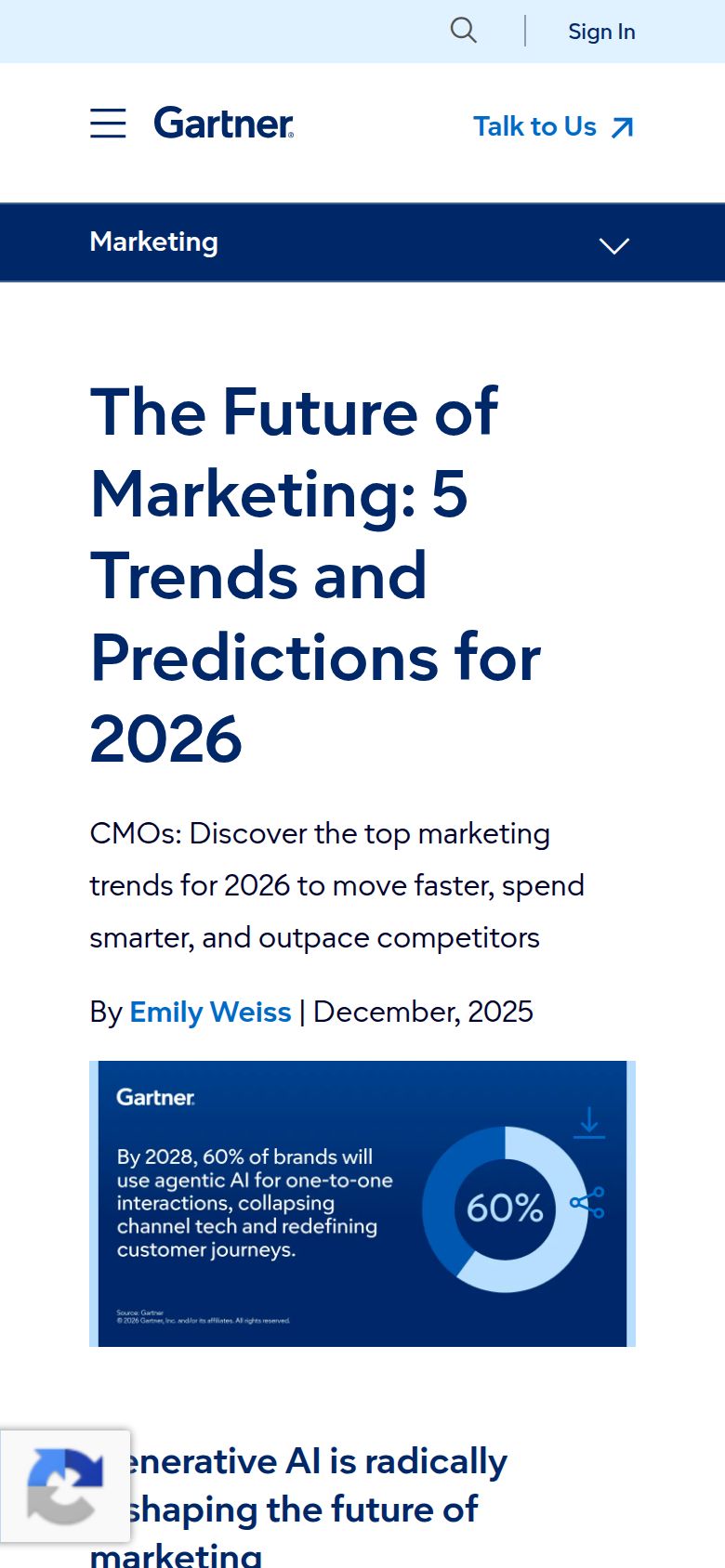
Not every trend deserves your attention. For instance, Gartner warns that VR-based marketing campaigns often fail to justify their high costs. Similarly, trends like influencer marketing are becoming less effective due to oversaturation. Focus on strategies that align with your business goals.
The allure of new and shiny technologies can be tempting, but it’s essential to evaluate their potential ROI before committing significant resources. For example, while VR might offer an immersive experience, the high costs and limited audience reach often make it an impractical choice for most brands.
How Can Marketers Prioritize Trends Effectively?
Start by running a free scan to see where your marketing leaks. Then, prioritize trends backed by measurable results, like personalized AI and localized campaigns. Avoid chasing hype without a clear ROI path. If you’re unsure, book a call to discuss your specific needs.
Effective prioritization involves a combination of data analysis and strategic foresight. Marketers should focus on trends that align with their brand’s unique value proposition and target audience. For example, a tech company might prioritize AI-driven personalization, while a regional retailer might focus on localized marketing.
What’s Next for Marketing in 2026?
The future of marketing lies in balancing innovation with practicality. As Kantar notes, brands that combine cutting-edge tools with rigorous testing are the ones thriving. Stay skeptical of hype, focus on what works, and keep evolving your strategy.
Looking ahead, the integration of AI and machine learning will continue to shape the marketing landscape. However, the most successful brands will be those that remain grounded in data and customer insights, avoiding the pitfalls of chasing trends without a clear strategy.
How Can Brands Prepare for Future Trends?
Preparation for future trends begins with a solid foundation in data analytics and a commitment to continuous learning. Brands should invest in tools and training that enable them to stay ahead of the curve. For example, adopting AI-driven analytics platforms can provide valuable insights into emerging trends and consumer behaviors.
Additionally, fostering a culture of experimentation and adaptability is crucial. Brands should encourage their teams to test new ideas and learn from both successes and failures. This approach ensures that they remain agile and responsive to changes in the market.
What Role Does Ethics Play in Modern Marketing?
As marketing becomes increasingly data-driven, ethical considerations are more important than ever. Brands must ensure that they are using customer data responsibly and transparently. This includes obtaining explicit consent for data collection and ensuring that AI-driven personalization does not cross the line into manipulation.
Ethical marketing also involves being honest and transparent in all communications. Brands should avoid misleading claims and ensure that their messaging aligns with their values and mission. For example, a brand that promotes sustainability should ensure that its practices are genuinely eco-friendly, rather than engaging in greenwashing.
By prioritizing ethics, brands can build trust and loyalty with their customers, which is essential for long-term success in a competitive market.
How Can Brands Measure the Impact of Their Marketing Efforts?
Measuring the impact of marketing efforts requires a comprehensive approach that goes beyond traditional metrics like clicks and impressions. Brands should focus on metrics that directly tie to business outcomes, such as customer acquisition cost (CAC), lifetime value (LTV), and return on ad spend (ROAS).
For example, a SaaS company might use cohort analysis to track how different customer segments perform over time, providing insights into the long-term value of its marketing efforts. Similarly, an e-commerce brand might use attribution modeling to understand the full customer journey and allocate budget more effectively.
By focusing on these deeper metrics, brands can gain a clearer understanding of the true impact of their marketing strategies and make more informed decisions.
What Are the Risks of Over-Reliance on AI in Marketing?
While AI offers significant advantages, over-reliance on AI can lead to potential risks. One major concern is the loss of human touch in marketing. AI-driven campaigns can sometimes feel impersonal, leading to disengagement from customers.
Another risk is the potential for algorithmic bias. If AI systems are trained on biased datasets, they can perpetuate and even amplify those biases in marketing campaigns. For example, an AI system might disproportionately target certain demographics, leading to unfair exclusion or misrepresentation.
Brands must strike a balance between leveraging AI for efficiency and maintaining a human element in their marketing efforts. Regular audits of AI systems and continuous human oversight can help mitigate these risks.
How Can Small Businesses Compete with Larger Brands in 2026?
Small businesses can compete with larger brands by focusing on niche markets and leveraging their agility. While larger brands may have more resources, small businesses can often respond more quickly to market changes and customer feedback.
For example, a local boutique might use social media to build a loyal community of customers, offering personalized recommendations and exclusive deals. By focusing on building strong relationships with their customers, small businesses can create a competitive advantage that larger brands may struggle to replicate.
Additionally, small businesses can leverage affordable AI tools and localized marketing strategies to compete effectively without the need for massive budgets. By staying nimble and customer-focused, small businesses can thrive in the competitive landscape of 2026.