Meta’s AI Ad Blitz: Reckoning or Growing Pains?

Written by Elias Oender
July 30, 2026 3 min read
The quick answer
Meta’s AI-driven advertising push is under scrutiny as expenses rise and stock dips. While the company’s strategy leverages optimism and nostalgia, critics argue it’s light on actual AI innovation. This situation highlights the broader challenges of scaling AI in advertising without alienating advertisers or overspending.
What’s Behind Meta’s AI Ad Blitz?
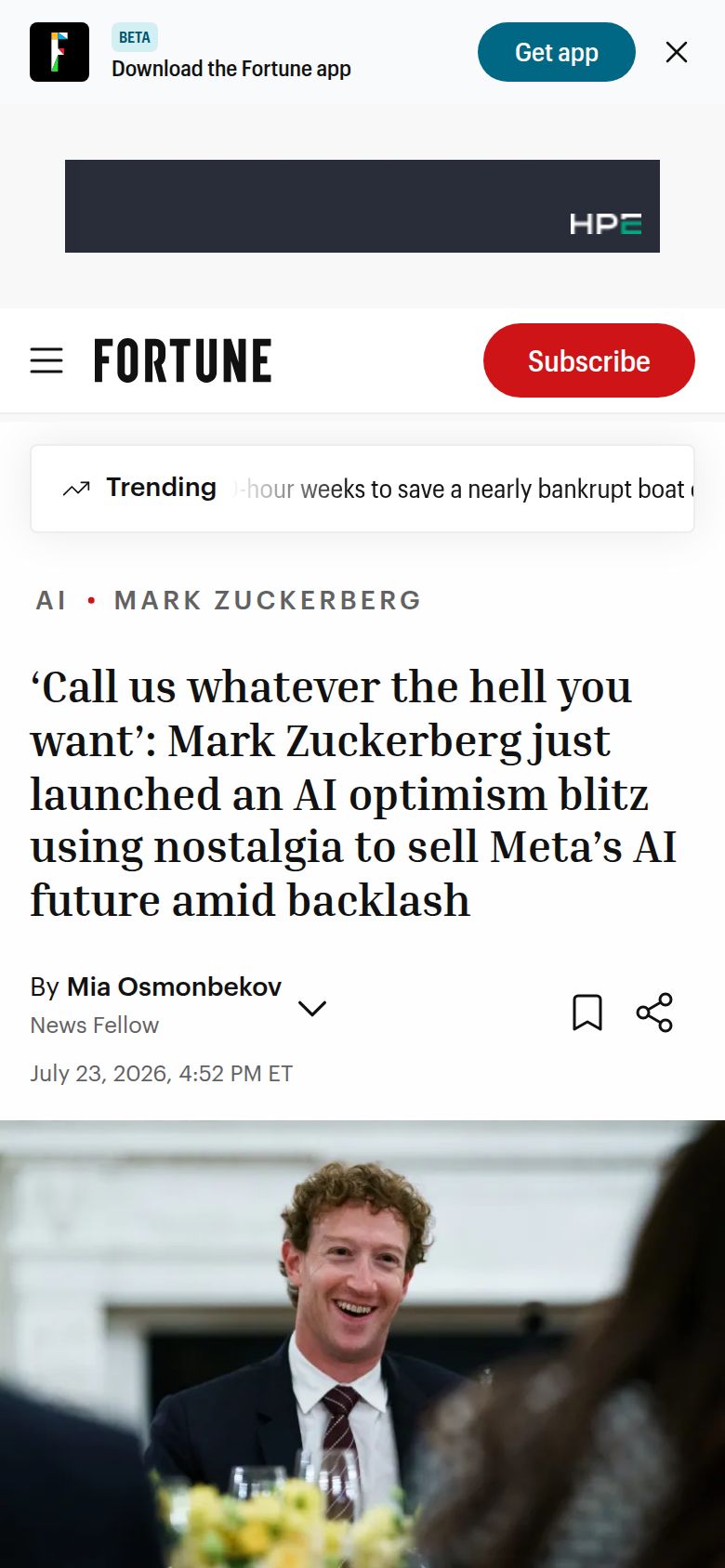
Meta’s recent push into AI-driven advertising has been hard to miss. The company has rolled out a series of campaigns aimed at promoting its AI capabilities, leveraging nostalgia and optimism. However, one report suggests that these efforts are more about messaging than actual innovation. This raises questions about whether Meta is truly advancing AI in advertising or merely hyping its potential.
Why Are Critics Skeptical?
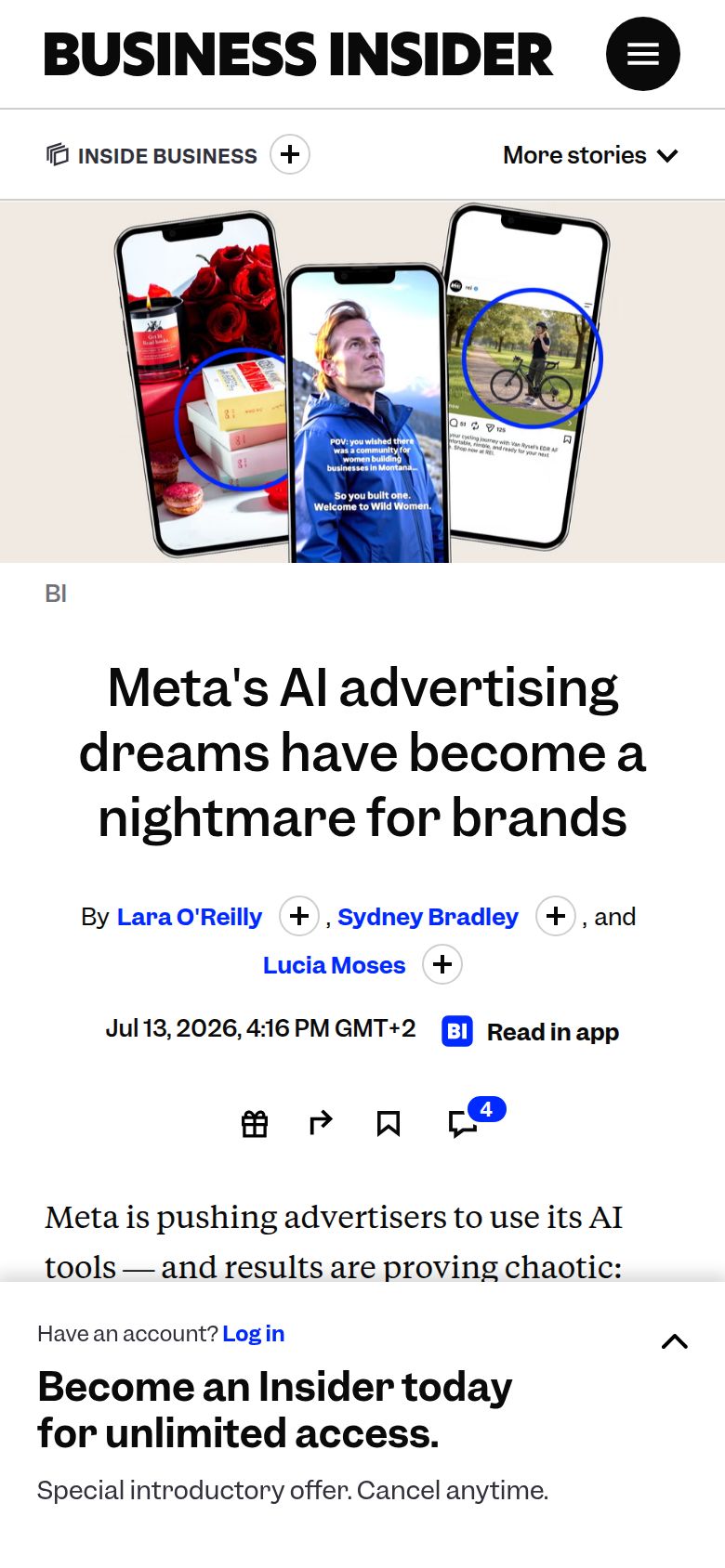
Critics argue that Meta’s AI advertising push is causing chaos for advertisers. An analysis found that many brands are struggling to adapt to the new tools, leading to inefficiencies and frustration. Additionally, Meta’s rising expenses and declining stock price have sparked concerns about the sustainability of its strategy. This skepticism is compounded by the fact that the campaigns are conspicuously light on actual AI, focusing instead on broad promises.
Is This a Reckoning or Growing Pains?
The current situation could be seen as both a reckoning and growing pains. On one hand, Meta’s aggressive push highlights the challenges of scaling AI in advertising without alienating advertisers or overspending. On the other hand, it could simply be part of the natural evolution in a hyper-competitive market. As covered here, Meta is taking on AI skepticism head-on, but whether this will translate into tangible results remains to be seen.
To understand how AI can truly impact your marketing strategy, consider running a free scan to see where your efforts could benefit from real innovation. Or, book a call to discuss how to navigate these evolving trends effectively.
For one account, we run weekly optimizations based on click-through rate gaps and scroll depth, refining titles, descriptions, and FAQ blocks to align with AI-driven search behavior. This approach ensures ads and content stay ahead of algorithmic shifts like Meta’s AI push. Another client’s setup uses a GEO/AEO layer, logging GPTBot and ClaudeBot hits to track exactly what AI crawlers read, ensuring every ad and landing page is optimized for both human and machine audiences. This precision prevents the chaos many brands face when adapting to new tools.
How to Navigate Meta’s AI-Driven Chaos Without Losing Your Mind
The first step is to stop treating Meta’s AI tools as magic bullets. They’re not. They’re tools, and like any tool, they require calibration. Here’s what I’ve seen work when dealing with Meta’s AI-driven ad systems:
- Audit your creative library. Meta’s AI thrives on variety. If you’re feeding it the same three ad creatives, it’s going to choke. Build a library of at least 20 variations for each campaign.
- Layer in manual controls. Don’t let the AI run wild. Set clear budgets, bid caps, and audience exclusions. Meta’s AI will optimize within those constraints, but without them, it’ll burn cash.
- Track performance by segment. Meta’s AI loves to bundle data, but that can mask inefficiencies. Break out performance by geo, demographic, and device to spot where the AI is overspending.
The Real Risk of Over-Reliance on Meta’s AI
The biggest danger isn’t inefficiency. It’s loss of control. When you rely too heavily on Meta’s AI, you lose the ability to pivot quickly. I’ve seen campaigns where the AI optimized for a metric that didn’t align with business goals, like driving clicks instead of conversions. The fix? Always have a manual backup plan. Here’s how:
- Run parallel campaigns. One AI-driven, one manual. Compare performance weekly.
- Monitor creative fatigue. AI tends to overuse high-performing creatives, leading to burnout. Rotate them manually if needed.
- Keep a close eye on frequency. Meta’s AI can oversaturate audiences. Cap frequency at 3-5 impressions per user per week.
The bottom line is this: Meta’s AI is powerful, but it’s not infallible. Treat it like a junior analyst, useful, but requiring oversight. The brands that succeed with Meta’s AI-driven tools are the ones that stay hands-on, even when the platform pushes for full automation.