Meta’s AI Ad Tools Are Drowning Creativity in Scale

Written by Elias Oender
July 22, 2026 7 min read
The quick answer
Meta’s AI ad tools focus on scaling ad delivery and automation, often at the expense of creative storytelling. While these tools promise efficiency, they risk commoditizing creativity and drowning marketers in automation hype. Performance marketers must balance scale with brand control, leveraging AI for incremental gains while preserving human-driven creative strategy. A measured approach ensures AI enhances, rather than replaces, meaningful marketing.
Why is Meta’s AI ad push so controversial?
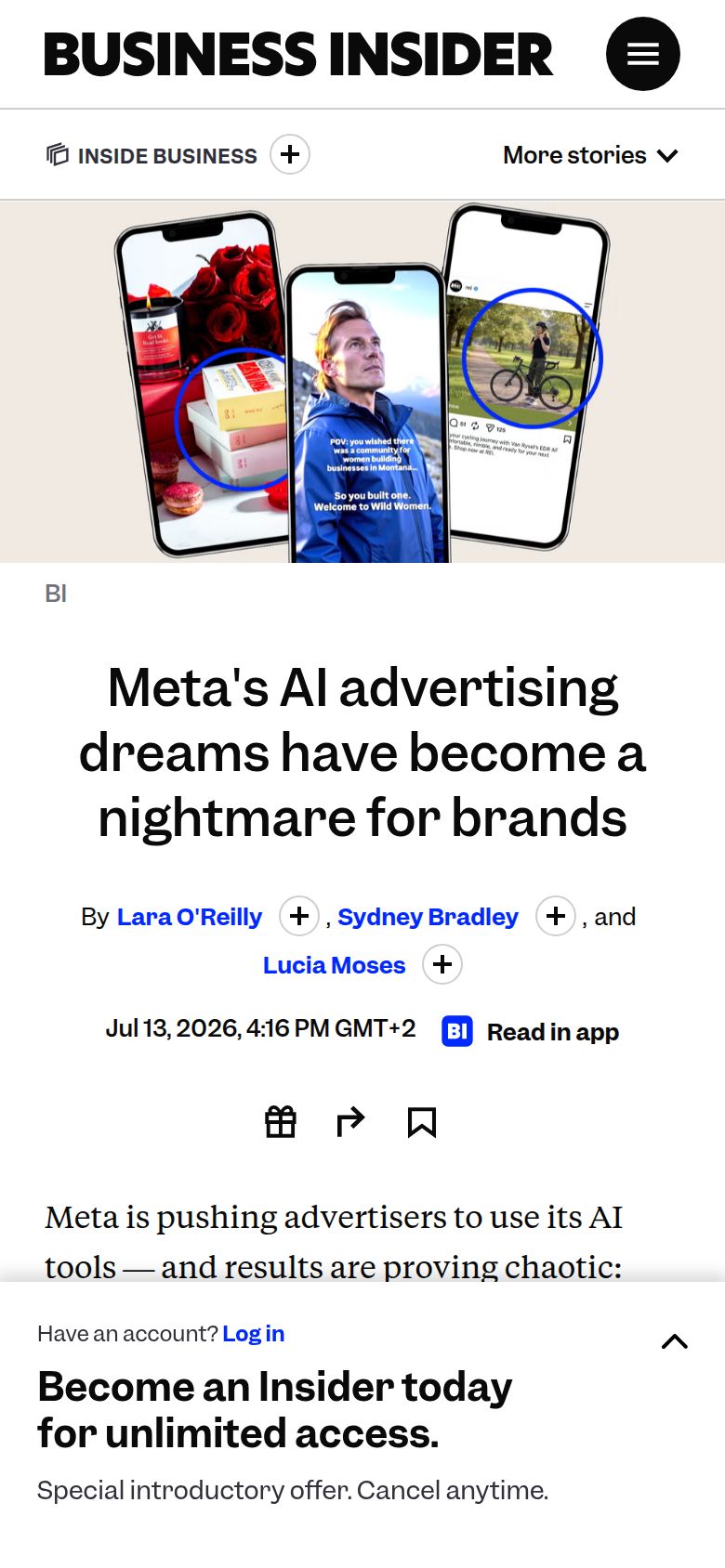
Meta’s aggressive rollout of AI-driven ad tools has sparked heated debate among marketers. These tools promise to automate everything from ad creation to targeting, scaling campaigns faster than ever. But as one report points out, this focus on scale often comes at the expense of creative storytelling. Marketers are finding their ads homogenized, losing the unique voice that connects with audiences.
What’s often overlooked is the broader ecosystem impact. Meta’s AI tools are designed to benefit Meta first, optimizing for engagement metrics that keep users scrolling. This creates a feedback loop where ads become increasingly sensationalized or generic to chase clicks, further eroding brand trust. As one marketer put it, “We’re not just competing with other brands, we’re competing with Meta’s algorithm.”
Does automation drown out creativity?
Absolutely. Meta’s AI tools prioritize efficiency over originality, leading to a flood of ads that feel generic. As Business Insider notes, brands are struggling to maintain control over their messaging. The result? Ads that might scale well but fail to resonate emotionally. Creativity, the soul of marketing, is being commoditized.
Take, for example, a case where a luxury brand used Meta’s AI tools to generate ad creatives. The AI produced technically sound ads, but they lacked the sophistication and nuance that defined the brand’s identity. The result was a campaign that performed well on paper but alienated the brand’s core audience, who felt the messaging was out of touch.
What’s the real cost of over-automation?
The cost is brand identity. When AI handles everything, from copywriting to creative decisions, ads lose their authenticity. Marketing Brew highlights how marketers feel sidelined, with tools often overriding human input. This not only dilutes brand voice but also risks alienating audiences who crave genuine connections.
One under-discussed aspect is the long-term impact on brand equity. Over-automation can lead to a “race to the bottom” where brands sacrifice differentiation for efficiency. In one instance, a mid-sized e-commerce brand saw a 20% increase in CTR (click-through rate) using Meta’s AI tools, but their conversion rate dropped by 15% because the ads failed to communicate what made their product unique.
How can performance marketers adapt?
The key is balance. Use AI for what it does best, optimizing targeting and delivery, but keep creative strategy human-driven. As we’ve discussed in what AI marketing actually changes, AI excels at incremental improvements, not revolutionary ideas. Pair it with human creativity for ads that scale without losing impact.
For instance, consider using AI to A/B test headlines or optimize ad placements, but leave the core creative narrative to your team. One performance marketer we spoke to shared how they use AI to generate 10 variations of a headline, then have a human editor refine the best three. This hybrid approach ensures efficiency without sacrificing quality.
What’s the role of storytelling in AI marketing?
Storytelling remains critical. Even with AI tools, ads must tell compelling stories to engage audiences. As PPC Land argues, marketers must resist the temptation to let AI replace this core function. Instead, use AI to enhance storytelling, not replace it.
A practical example is leveraging AI to identify audience segments that resonate with specific narratives, then crafting stories tailored to those segments. One travel brand used AI to discover that their audience responded strongly to “local hero” stories, so they shifted their creative focus to highlight community-driven experiences.
Are there hidden risks in Meta’s AI tools?
Yes. Beyond commoditization, there’s the risk of over-reliance. Marketers who lean too heavily on automation may miss opportunities for creative experimentation. As Klover AI notes, Meta’s strategy prioritizes AI dominance, often at the expense of brand control. Marketers must stay vigilant, ensuring AI serves their goals, not the other way around.
Another hidden risk is data dependency. Meta’s AI tools rely heavily on user data, which can create blind spots if the data is skewed or incomplete. For example, a brand targeting a niche audience might find their ads performing poorly because Meta’s algorithm favors broader, more generic content.
How can marketers audit their AI ad strategy?
Start by running a free scan to identify leaks in your current approach. Focus on metrics that matter, like incrementality and ROAS, but don’t lose sight of creative quality. As we’ve covered in why your ROAS number lies, metrics alone don’t tell the full story. Combine data-driven insights with creative intuition for ads that truly perform.
One effective audit strategy is to compare AI-generated campaigns with human-led ones. Look beyond immediate performance metrics and assess long-term brand impact, customer sentiment, and retention rates. This holistic approach ensures you’re not sacrificing long-term success for short-term gains.
What’s the future of AI in marketing?
The future lies in collaboration, not domination. AI should enhance human creativity, not replace it. As Meta’s tools evolve, marketers must stay critical, leveraging AI for efficiency while preserving the storytelling that makes ads memorable. For a deeper dive into tools that strike this balance, check out our guide on underrated AI marketing tools for 2026.
Looking ahead, we expect to see more AI tools designed with marketers in mind, offering greater control and customization. The next wave of innovation will likely focus on “explainable AI,” where marketers can understand and influence how algorithms make decisions. This transparency will be crucial for building trust and ensuring AI serves brand goals.
How does AI impact ad fatigue?
Ad fatigue is a growing concern in AI-driven campaigns. Because Meta’s tools optimize for engagement, they often push repetitive content to maximize short-term performance. This can lead to audience burnout, where users tune out ads altogether.
To combat this, marketers need to monitor frequency and diversify their creative approach. One tactic is to use AI to identify fatigue signals, like declining engagement rates, and rotate in fresh creatives before audiences disengage.
Can AI improve inclusivity in advertising?
Yes, but it’s not automatic. AI has the potential to analyze vast datasets and identify biases in ad targeting or creative content. However, without human oversight, it can also perpetuate stereotypes or exclude underrepresented groups.
For example, one brand used AI to optimize their ad targeting but found it was excluding older audiences because the algorithm prioritized younger demographics. By manually adjusting the targeting parameters, they were able to reach a more diverse audience and improve campaign performance.
Inclusivity requires intentionality. Marketers must actively audit their AI tools and datasets to ensure they’re reflecting the diversity of their audience.
How does AI impact ad spend efficiency?
AI has the potential to optimize ad spend by identifying high-performing audiences and creatives in real-time. However, this efficiency can come at a cost if not managed carefully. For instance, Meta’s AI tools might allocate budget toward lower-cost impressions that don’t drive meaningful conversions.
Marketers should regularly review how AI allocates their budget and adjust strategies to ensure funds are directed toward high-intent audiences. One approach is to set strict KPIs for AI tools, such as targeting only users who have shown intent to purchase within the last 30 days.
What’s the ethical dimension of AI in advertising?
AI raises important ethical questions, particularly around transparency and consent. Users often don’t understand how their data is being used to power AI-driven ads, which can erode trust.
Marketers must navigate these issues carefully by ensuring their AI strategies align with ethical standards. For example, brands can provide clear opt-out options and transparent explanations of how AI is used to personalize ads. Ethical AI use isn’t just a moral imperative, it’s a competitive advantage in building trust with audiences.
How can marketers future-proof their AI strategy?
Future-proofing requires a focus on adaptability and continuous learning. As AI evolves, marketers must stay informed about new tools and techniques while maintaining a critical eye.
Investing in training for your team is key. Equip them with the skills to understand and leverage AI effectively, while also fostering creativity and strategic thinking. Additionally, diversify your tech stack to avoid over-reliance on any single platform, ensuring flexibility as the landscape changes.