
Why Geo Optimierung Is Overhyped (And What Actually Works)

Written by Elias Oender
October 29, 2026 3 min read
The quick answer
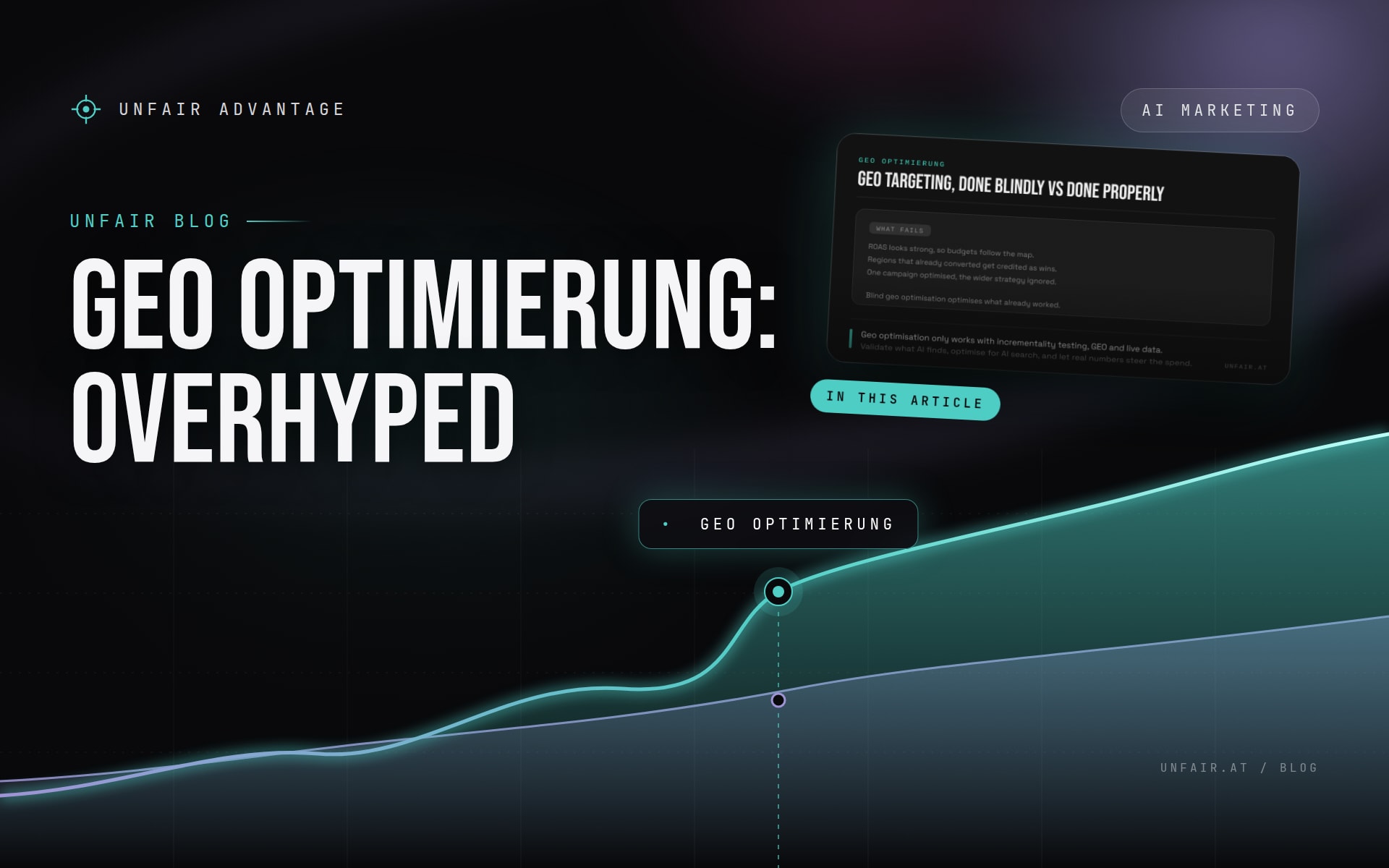
Geo optimierung uses AI to optimize marketing campaigns based on geographic data. While it promises smarter targeting and higher ROI, most strategies fail because they ignore incrementality testing, rely on outdated metrics like ROAS, and lack context. The key is combining AI-driven GEO with real-time performance data and structured testing.
Geo optimierung sounds like the future of marketing: AI-powered targeting, regional precision, and higher ROI. But most campaigns miss the mark. Here’s why, and what actually works.
What is geo optimierung?
Geo optimierung is the process of optimizing marketing campaigns based on geographic data using AI. It promises smarter targeting by tailoring messages to specific regions. Think of it as hyper-localized marketing, but with a spreadsheet and a Friday meeting.
Sounds great, until you realize most campaigns rely on outdated metrics and lack context. Let’s break it down.
Why does geo optimierung fail?
Most geo optimierung strategies fail for three reasons:
-
No incrementality testing. Without testing, you’re just guessing. A campaign might seem successful because it targets a high-revenue region, but what if that region was already converting? As covered here, incrementality testing separates real wins from false positives.
-
Outdated metrics like ROAS. ROAS might tell you how much revenue a campaign generated, but it doesn’t account for costs or broader business goals. As we’ve written before, relying on ROAS alone is like navigating with a broken compass.
-
Lack of context. Geo optimierung works best when it’s part of a larger strategy. Without context, you’re optimizing a single campaign while ignoring the bigger picture.
What actually works in geo optimierung?
Here’s how to make geo optimierung deliver:
-
Combine AI with incrementality testing. Use AI to identify patterns, but validate them with incrementality testing. This ensures you’re targeting regions that truly drive growth, not just those that look good on paper.
-
Adopt generative engine optimization (GEO). GEO optimizes content for AI-driven search engines like ChatGPT and Gemini. One report shows that structured FAQ blocks and answer-first content can boost visibility in AI search results.
-
Integrate real-time performance data. AI thrives on data. The more real-time performance data you feed it, the better it can adapt to changing conditions.
This is the job we run with Automated GEO, combining GEO with real-time performance data and structured testing to move budgets to the winners.
Is geo optimierung worth it?
Yes, if you do it right. Geo optimierung isn’t a silver bullet, but when combined with incrementality testing and GEO, it can drive real ROI. Start with a free scan to see where your marketing leaks.
How to get started with geo optimierung
Getting started with geo optimierung doesn’t have to be overwhelming. Here’s a step-by-step guide:
-
Assess your current data. Look at your existing geographic data. Are you tracking regional performance? Are you using AI tools to analyze this data?
-
Implement incrementality testing. Start with small tests to measure the true impact of your campaigns. This will help you understand which regions are genuinely driving growth.
-
Integrate GEO. Optimize your content for AI-driven search engines. Use structured FAQ blocks and answer-first content to boost visibility.
-
Monitor and adapt. Continuously feed real-time performance data into your AI tools. This will allow your campaigns to adapt to changing conditions and stay effective.
By following these steps, you can ensure that your geo optimierung efforts are both effective and sustainable.
Common mistakes to avoid
Even with the best intentions, mistakes can happen. Here are some common pitfalls to watch out for:
-
Over-reliance on AI. While AI is powerful, it’s not infallible. Always validate AI insights with incrementality testing.
-
Ignoring broader strategy. Geo optimierung should be part of a larger marketing strategy. Don’t optimize one campaign at the expense of the overall picture.
-
Neglecting real-time data. AI thrives on data. Make sure you’re feeding it real-time performance data to keep your campaigns relevant.
By avoiding these mistakes, you can maximize the ROI of your geo optimierung efforts.
Conclusion
Geo optimierung is a powerful tool when used correctly. It’s not about blindly following AI insights or relying on outdated metrics. It’s about combining AI with incrementality testing, integrating GEO, and feeding real-time performance data into your campaigns. When done right, geo optimierung can drive real ROI and give you a competitive edge. Start with a free scan to see where your marketing leaks and take the first step toward smarter, more effective campaigns.