BMW: Lower Cost per Click and Higher CTR Across 11 Markets

Written by Elias Oender
Performance consulting 4 min read bmw.at ↗
The short version
Multi-market performance marketing means one plan, one measurement standard and one budget logic for every country a brand runs in. For BMW in Austria and 10 other markets, that discipline delivered lower cost per click, higher click-through rates and a client rating no BMW consultant had reached before. Brand-lift and conversion studies with Meta proved what paid social earns.
How Did BMW Make Its Media Money Work Harder in 11 Markets?
BMW made its media money work harder by holding every market to one plan, one set of numbers and one rule: the budget backs what performs. For BMW, that discipline paid off in Austria and 10 other countries, where we worked as performance marketing consultants inside the marketing team, embedded through the Vienna digital agency Virtual Identity. The payoff showed in the two numbers every media buyer checks first: a lower cost per click and a higher click-through rate across 11 markets. It also showed in a client rating no BMW consultant had reached before. A brand that sets the standard in its category expects a partner who raises the level from the first campaign, and that rating is the verdict on exactly that. How the same results lifted the agency behind the account is told in our Virtual Identity case.
What Does One Launch Plan Do for Models Like the iX1?
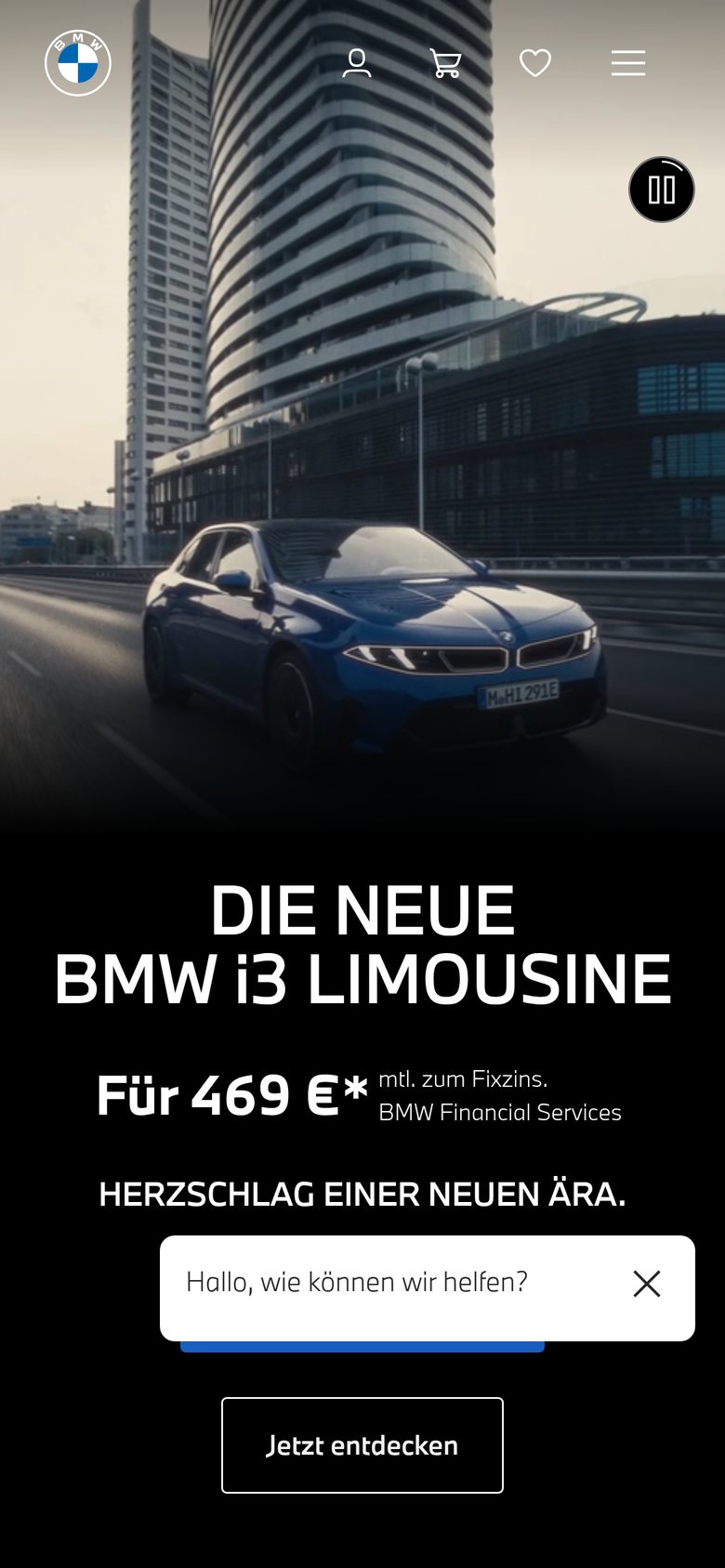
One launch plan lets the strongest idea win everywhere at once. For BMW, the iX1, the battery electric version of the X1, the refreshed 3 Series and an HR campaign all launched from one sharp plan, with campaign concepts we shaped and aligned together with the marketing team. A shared plan turns a multi-market launch into a fair contest: when every market reads the same numbers, the concept that performs shows early and can be backed while the launch window is still open. It also keeps the brand strong, because a model that looks and speaks the same way in every market builds one clear image. And it saves the money that would otherwise go into reinventing the same campaign country by country.
Why Test New Channels Before the Big Budget Moves?
Testing first means the big money only moves to channels that have already shown they pay. BMW’s always-on model campaign used exactly that logic: YouTube and Twitter came in as new reach, were measured against the established channels, and the budget followed the strongest performers. That is how a mature account keeps growing without paying more for each result, because fresh audiences come in on proven terms, at a cost the brand already knows. The result across the account was the combination every media buyer is after: new reach, a lower cost per click and a higher click-through rate. Google and Meta will always suggest spending more, and a tested channel mix is how a brand decides for itself where the next euro goes.
How Do You Prove What Paid Social Actually Earns?
You prove it with a controlled test that compares people who saw the ads with people who did not. Meta’s own documentation describes this split between a randomised test group that sees the ads and a control group that does not, and the gap between the two is what the campaign really added. For BMW, we ran brand-lift and conversion studies with Meta, which proved what paid social earns, in awareness and in conversions, with a control group keeping the numbers honest. That is the rare platform figure a marketing director can take into a budget decision without footnotes. Direct alignment with Meta, Pinterest and Twitter put BMW’s goals at the centre of every platform conversation, which matters, because each platform optimises first for its own revenue.
What Makes a KPI Framework Work Across Paid and Organic Content?
A KPI framework works when paid and organic content are judged by the same few numbers, so every post and every ad earns its place on one scale. For BMW, we built that framework together with an Adobe Analytics dashboard, the kind of workspace Adobe built for analysing fast and sharing insights, and condensed each month’s performance into learnings the next round of campaigns could use. The payoff of a framework like this is speed: the strongest content gets found and funded sooner, and weak spots surface while they are still cheap to fix. It also makes every budget conversation shorter, because each euro arrives with a number that explains it. Across 11 markets, that clarity is what keeps a large account sharp.
What Can Your Brand Take From BMW’s Playbook?
Your brand can take the whole playbook: one plan for every market, every new channel tested before the big money moves, and every euro held to a number both sides agree on. At Unfair Advantage Marketing, we bring that playbook to brands of every size, because the discipline that made BMW’s media money work harder scales to any budget worth guarding. Today we run it with AI agents. Ad Infinitum, our engine of 120+ agents and rules, reads the numbers live and backs the strongest campaign the moment the data turns, so the money follows the winner while the winner is still winning. For our clients, that means the BMW standard, delivered at the speed of their own data.
See where your media budget could work harder by running a free scan.