Google Ads Bidding Changes June 2026: What’s New, What’s Measured

Written by Elias Oender
May 7, 2026 3 min read

The quick answer
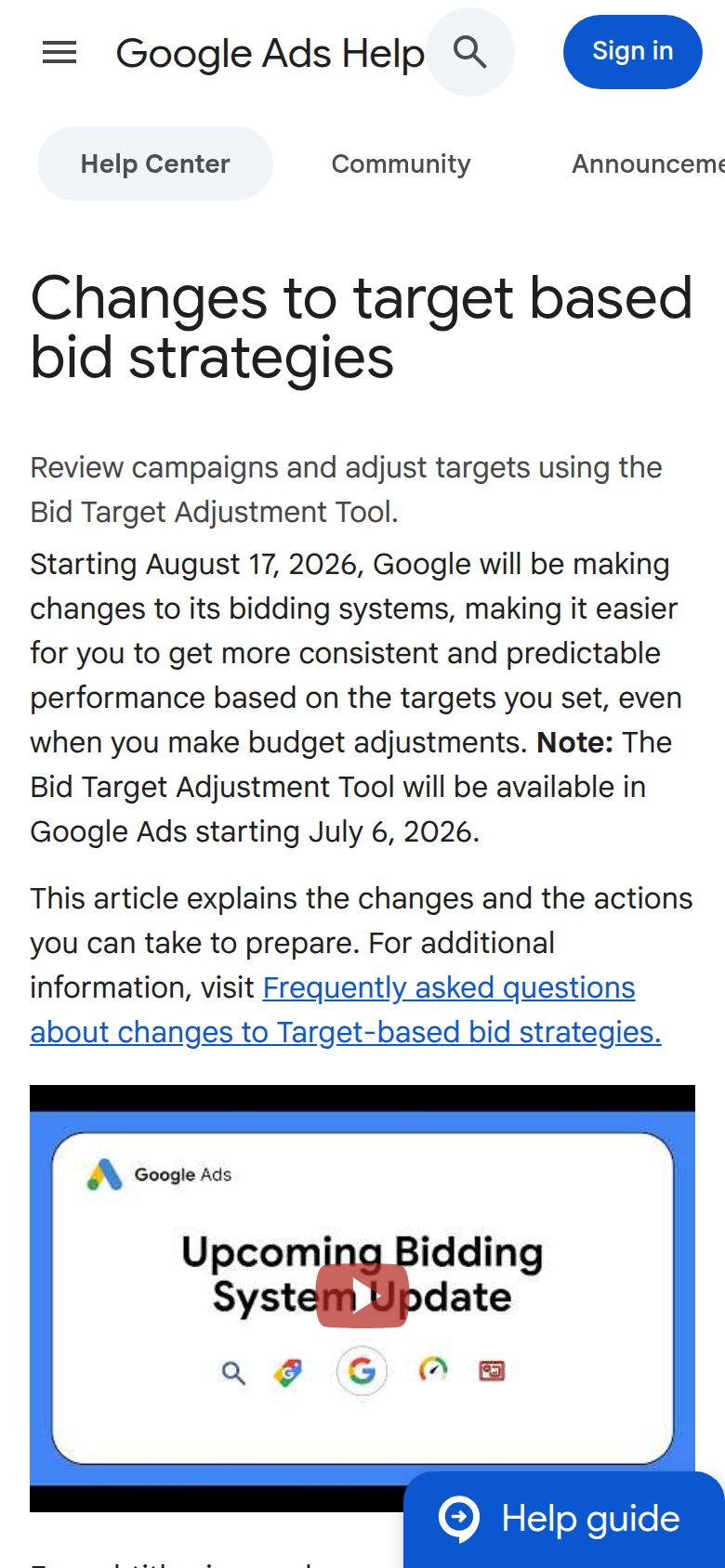
Google Ads introduced bidding changes on June 16, 2026, expanding Smart Bidding Exploration to Performance Max and Shopping, while adding budget-controlled optimization. These updates aim to improve efficiency but require careful testing. Avoid panic-migrating; instead, assess performance shifts incrementally.
What Changed in Google Ads Bidding on June 16, 2026?
Google Ads rolled out significant bidding changes on June 16, 2026, marking another step in its evolving automation strategy. The updates include Smart Bidding Exploration expanding to Performance Max and Shopping campaigns, alongside new budget-controlled optimization features. These changes aim to streamline campaign management, but they also raise questions about control and transparency.
The highlight is Smart Bidding Exploration now covering Performance Max and Shopping. This means advertisers can access deeper insights into bidding strategies, including predictive metrics and scenario analysis, as covered here. For Performance Max, this could unlock more granular campaign adjustments, though some marketers remain skeptical about handing over further control.
Budget-controlled optimization is another key addition. It allows advertisers to set stricter parameters around budget allocation, aiming to prevent overspending while maintaining performance. This feature is particularly relevant for campaigns with tight margins or limited budgets, according to one report.
Should You Panic-Migrate Your Campaigns?
No. While these changes are significant, they don’t necessitate immediate, wholesale migration. Instead, adopt a measured approach: test the new features incrementally, monitor performance shifts, and adjust as needed. Panic-migrating risks disrupting stable campaigns and missing nuances in how these updates perform for your specific goals.
Start by enabling Smart Bidding Exploration for a subset of Performance Max or Shopping campaigns. Track metrics like ROAS and CPL to gauge impact. Similarly, test budget-controlled optimization on campaigns where overspending has been a concern. Use these trials to inform broader rollouts.
What’s the Real Impact on Performance Max?
Performance Max campaigns could see the most direct impact from these changes. Smart Bidding Exploration offers a clearer view of how bids are optimized across channels, potentially improving efficiency. However, some advertisers worry about losing granular control, especially in complex campaigns.
The key is to use these tools judiciously. Pair Smart Bidding Exploration with regular performance reviews to ensure alignment with your goals. And don’t forget the basics: a well-structured campaign with strong assets and clear objectives will always outperform poorly configured automation.
How to Approach Budget-Controlled Optimization
Budget-controlled optimization addresses a common pain point: overspending. By setting stricter parameters, advertisers can prevent budgets from ballooning while maintaining performance, as detailed here. This feature is particularly useful for campaigns with tight margins or limited budgets.
To get started, apply budget-controlled optimization to campaigns where overspending has been an issue. Monitor metrics like cost-per-lead and ROAS to ensure performance remains stable. Over time, refine your settings based on campaign performance and evolving goals.
Should You Care About These Changes?
Yes, but with a balanced perspective. These updates reflect Google’s ongoing push toward automation and efficiency. While they offer potential benefits, they also require careful testing and adaptation. Avoid the hype; focus on how these changes impact your specific campaigns and goals.
If you’re unsure where to start, consider running a free scan to assess how these updates might affect your campaigns. Or book a call to discuss tailored strategies. For more on Google’s evolving ad stack, check out Google Marketing Live 2026: Gemini Ad Stack.
Remember: automation is a tool, not a magic bullet. Use these updates to enhance your campaigns, but don’t lose sight of the fundamentals.
One account uses Smart Bidding Exploration paired with a ROAS-split budget allocation system. This setup ensures that each test branch has a floor budget to maintain stability, while losing angles lose budget quickly based on conversion performance. The combination of Google’s predictive metrics and our EWMA-weighted verdicts allows for fast iteration without disrupting the campaign’s core structure. Automation tools like Smart Bidding Exploration work best when balanced with rigorous, data-driven workflows.