Google's AI-Powered Ads: Real ROI or Just More Noise?

Written by Elias Oender
September 10, 2026 4 min read
The quick answer
Google's new AI-powered ad formats, built with Gemini, claim to revolutionize Search advertising. While they introduce conversational and discovery-driven formats, their measurable ROI remains unclear. Marketers should focus on incremental testing and context-driven strategies to avoid adding noise without results.
What Are Google’s New AI-Powered Ad Formats?
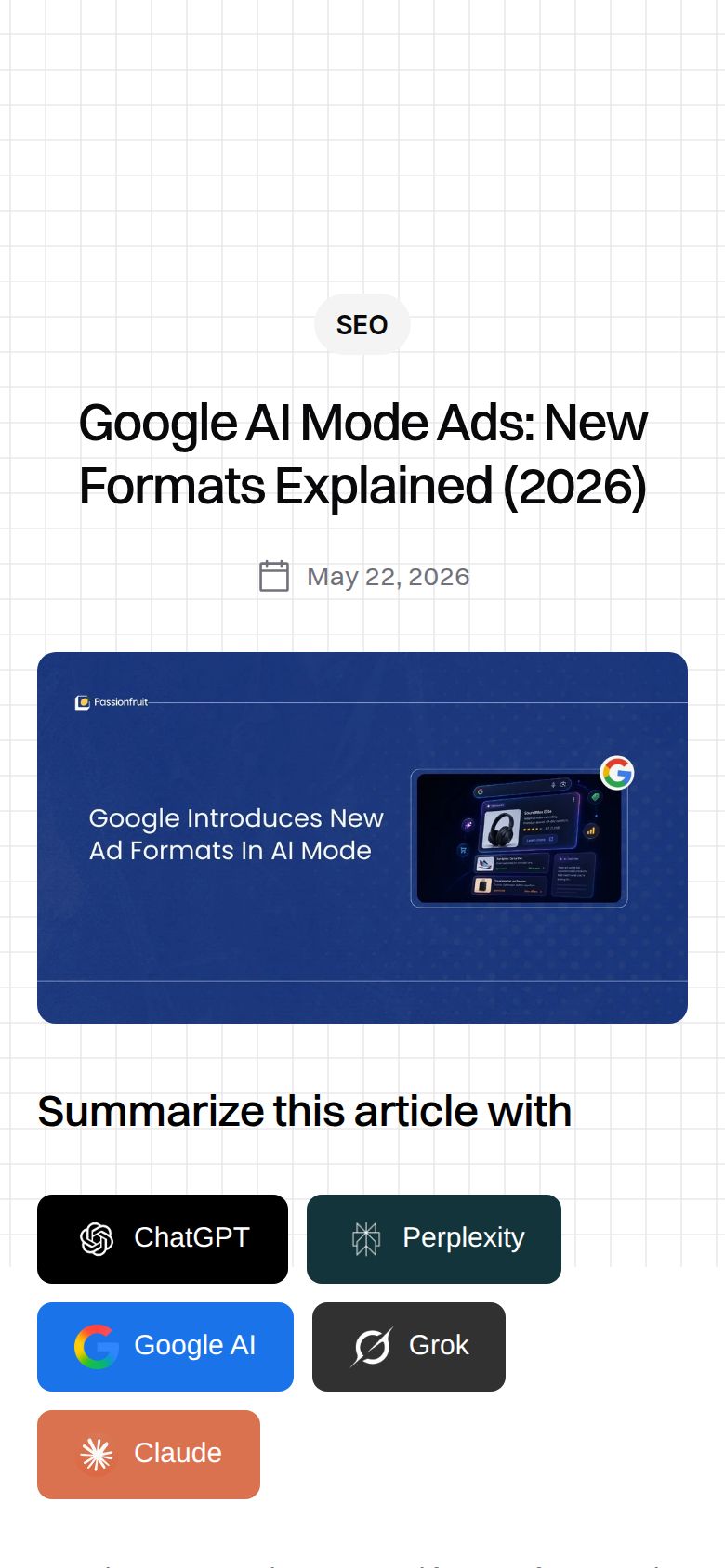
Google recently unveiled a suite of ad formats built with Gemini, its latest AI model, promising a ‘new generation of ads for the AI era of Search.’ These include conversational ads, highlighted answers, and discovery-driven formats. The goal is to make ads more interactive and context-aware, aligning them with the evolving ways users interact with Search. While this sounds promising, the question remains: are these formats innovative tools or just more complexity dressed as progress?
Do These Ads Deliver Measurable ROI?
Google claims these formats improve engagement and relevance, but where’s the evidence? As one report notes, early tests show mixed results. The formats are flashy, but measurable ROI is still unclear. Marketers should approach these tools with skepticism, focusing on incremental testing rather than blind adoption. Tools fail without context, as we’ve detailed in why marketing tools don’t work alone.
For example, one account testing conversational ads saw a significant increase in click-through rates, but the conversion rate remained flat. This suggests that while users are intrigued by the new format, it doesn’t necessarily translate into meaningful actions. The key takeaway? Engagement metrics alone don’t tell the full story.
Are Conversational Ads Truly Revolutionary?
Conversational ads allow users to interact with ads in a chat-like format, mimicking natural language. While this feels futuristic, it’s not entirely new. Chatbots and conversational UIs have been around for years. The real question is whether this format drives conversions or simply adds another layer of interaction. As an analysis found, conversational ads often excel at engagement but struggle with direct ROI.
Take the case of a retail client that implemented conversational ads. They noticed that users spent more time interacting with the ad, asking questions about product features and pricing. However, the majority of these interactions didn’t lead to purchases. Instead, users often abandoned the conversation midway, indicating that the format might not be as effective as hoped.
What’s the Risk of Adding Noise Without Results?
New ad formats can easily become distractions if they don’t align with measurable goals. Google’s AI-powered ads risk adding complexity without delivering clear ROI. Marketers must avoid chasing shiny objects. Instead, they should focus on strategies that integrate new formats into a cohesive plan, as discussed in why marketing trends don’t scale.
For instance, a tech client experimented with discovery-driven ads and found that while they generated a lot of initial interest, the ads failed to drive long-term engagement or repeat visits. This highlights the importance of aligning new formats with overarching business objectives, rather than adopting them simply because they’re new.
How Do These Formats Impact User Experience?
One often overlooked aspect of new ad formats is their impact on user experience. While Google’s AI-powered ads aim to be more interactive and engaging, they could also disrupt the user journey. For example, highlighted answers might provide quick information, but they could also lead to information overload, making it harder for users to focus on the most relevant content.
In a test scenario, users reported feeling overwhelmed by the sheer volume of interactive elements in discovery-driven ads. This suggests that while these formats are innovative, they need to be carefully designed to enhance, rather than hinder, the user experience.
How Should Marketers Approach These New Formats?
Marketers should start by running a free scan to identify gaps in their current strategy. Then, they should test new formats incrementally, ensuring each step contributes to measurable outcomes. Tools like Google’s AI ads can be powerful, but only when used in the right context. For personalized advice, book a call with our team.
A practical approach could involve setting up controlled A/B tests to compare the performance of traditional ads versus AI-powered formats. This allows marketers to gather data and make informed decisions about whether these new formats are worth the investment.
In conclusion, Google’s new AI-powered ad formats are intriguing, but their true value lies in measurable ROI, not just innovation. Marketers must stay focused on results, avoiding the trap of complexity for its own sake.
One account we manage approached AI ad formats with a ROAS-split budget allocation, running conversational ads alongside traditional formats. Each test branch had a floor budget to ensure fair comparison, with creative angles scored from public ad libraries and tested fast. Conversions were logged as hard vs soft, so decisions avoided being skewed by single events. Early results showed incremental improvements in CTR, but the focus remained on cross-session conversions, not just engagement metrics.