Google's AI Ad Labels: Transparency Theater?

Written by Elias Oender
July 16, 2026 3 min read
The quick answer
Google's new AI ad labels aim to bring transparency by disclosing AI-generated content, but the system relies on advertiser honesty, which leaves room for abuse. This approach risks undermining trust in AI-driven marketing tools and forces performance marketers to rethink third-party AI integrations.
What Are Google’s AI Ad Labels?
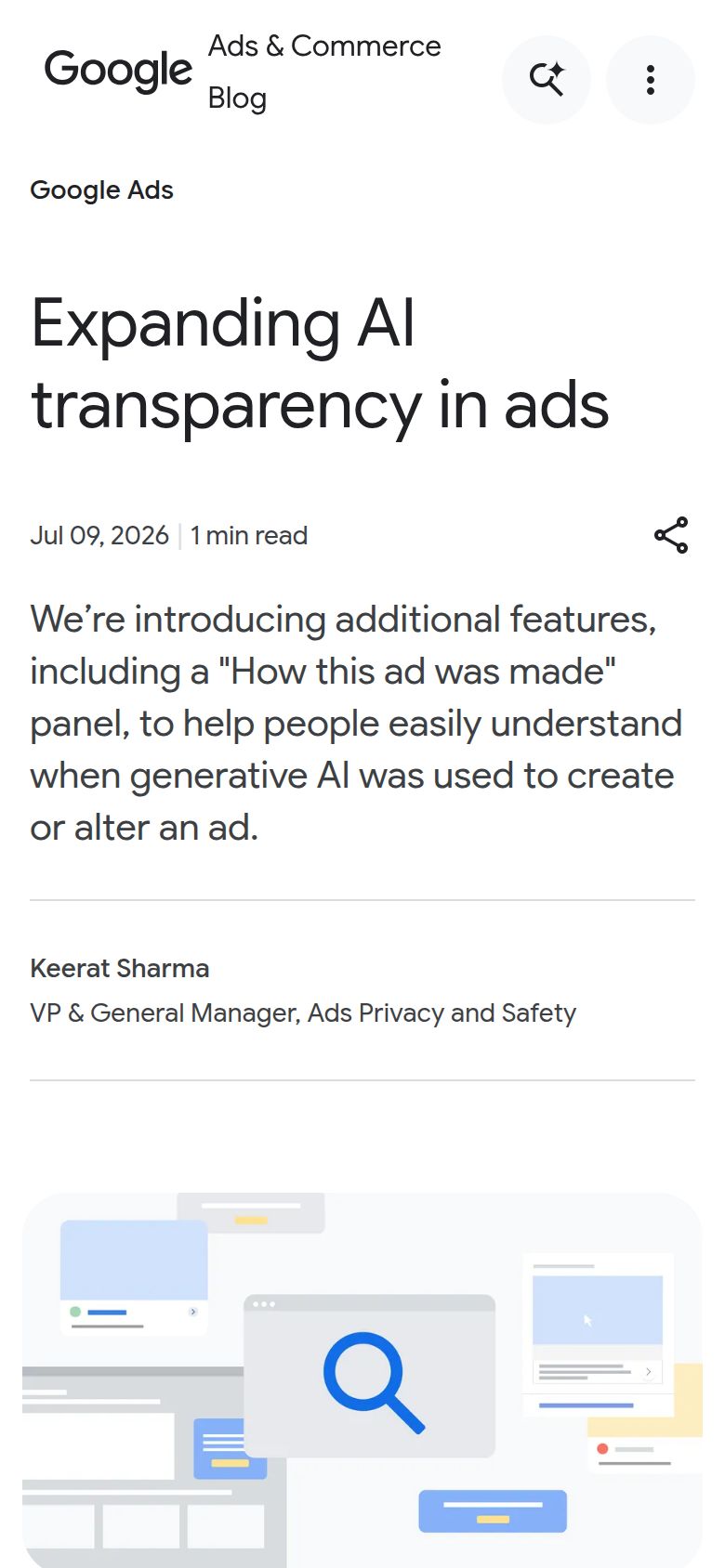
Google recently introduced AI ad labels, aiming to bring transparency to AI-generated or AI-assisted ads. The labels disclose when AI was used in ad creation, targeting, or optimization. According to Google’s blog post, this move is part of their broader push for ethical AI usage in advertising. While this sounds promising, the devil is in the details.
Why Transparency Relies on Honesty
The system relies on advertisers to self-disclose AI usage. This means advertisers could easily omit labels or misuse them, intentionally or not. As one report highlights, without strict enforcement, labels may become more of a checkbox exercise than a genuine transparency tool. This reliance on honesty risks creating a false sense of security among consumers and marketers alike.
How Does This Affect Performance Marketers?
For performance marketers, this development raises questions about trust in third-party AI tools. If advertisers can manipulate labels, how can marketers ensure they’re using AI responsibly? Tools that offer verifiable transparency and accountability will become more critical. Run a free scan to see where your marketing stack might be vulnerable to such issues. Additionally, what AI marketing actually changes explores how AI impacts workflows beyond just ads.
The Bigger Picture
While Google’s AI labels are a step in the right direction, they’re not a silver bullet. Marketers must remain skeptical of overhyped transparency claims and focus on tools and practices that deliver real accountability. Book a call to discuss how to navigate these changes effectively. As AI continues to reshape marketing, the industry must prioritize systems that build trust, not just labels.
The Hidden Costs of Label Fatigue
Adding AI labels to ads introduces a new layer of complexity for marketers. Label fatigue is real. Consumers already face information overload, and throwing another label into the mix risks diluting its impact. When every ad starts carrying an AI disclosure, people stop paying attention. This isn’t just theoretical. We’ve seen it happen with privacy notices and cookie banners. They were supposed to empower users, but now they’re just noise.
Here’s the kicker: labels don’t solve the underlying problem. They’re a band-aid on a bullet wound. If an ad is misleading or unethical, slapping an AI label on it doesn’t make it better. It just gives Google a PR win while shifting the burden to advertisers. Marketers need to focus on creating authentic, value-driven content, not just checking boxes.
Practical Steps for Marketers
So, what should you do on Monday morning? Start by auditing your ad creation process. Here’s a quick checklist:
- Verify AI usage: Document where AI is used in your campaigns, from creatives to targeting.
- Train your team: Ensure everyone understands the implications of AI labels and how to use them correctly.
- Monitor competitors: Keep an eye on how others are using labels. Are they being transparent, or are they gaming the system?
- Test consumer perception: Run small-scale surveys to see if labels impact trust or engagement.
Next, invest in tools that go beyond labels. Look for platforms that offer auditable AI processes, not just disclosures. Transparency isn’t just about admitting you used AI. It’s about showing how it was used and why. This builds trust with both consumers and regulators.
Finally, don’t let labels distract you from the bigger picture. AI is a tool, not a strategy. Focus on delivering real value to your audience. If your ads are genuinely helpful, the labels won’t matter. But if they’re misleading, no amount of disclosure will save you.
Labels are a start, but they’re not the finish line. The real work happens behind the scenes, in the systems and processes that drive your campaigns. Get those right, and the labels will take care of themselves.