How to Plan a Ramadan Campaign in the UAE: Budgets, Tone Shifts, and Demand Peaks

Written by Elias Oender
November 6, 2026 6 min read
The quick answer
A Ramadan campaign in the UAE requires careful budget phasing (pre, during, and post-Ramadan), a tone shift toward empathy and community, dayparting around iftar and suhoor, and a focus on the Eid demand surge. Local nuances like multi-national audiences, AED budgets, and UAE-specific delivery habits shape success.
Why Does Ramadan Demand Shift So Drastically in the UAE?
Ramadan in the UAE isn’t just a holy month; it’s a cultural and economic event. The multi-national expat population brings diverse consumption patterns, while local traditions like iftar gatherings and Eid gifting create unique demand spikes. Early Ramadan sees essentials like groceries and modest fashion dominate, but by Eid, the focus shifts to luxury goods, electronics, and food delivery. One report found Eid-related searches spike 150% in the UAE compared to regional averages.
Here’s the kicker: the UAE’s Ramadan isn’t just a local affair. It’s a global stage. With over 80% of the population being expats, the demand curve is a rollercoaster. Think about it: one household might stock up on dates and spices, while another is hunting for the latest iPhone or a designer Eid outfit. The beauty lies in the chaos. And the chaos lies in the timing. Early Ramadan is all about preparation, groceries, meal kits, kitchen gadgets. Mid-Ramadan shifts to fashion and home decor as families prepare for gatherings. By Eid, it’s a full-blown retail frenzy. Luxury brands know this and time their campaigns accordingly. Miss the wave, and you’re left selling winter coats in July.
How Should You Phase Your Ramadan Budget?
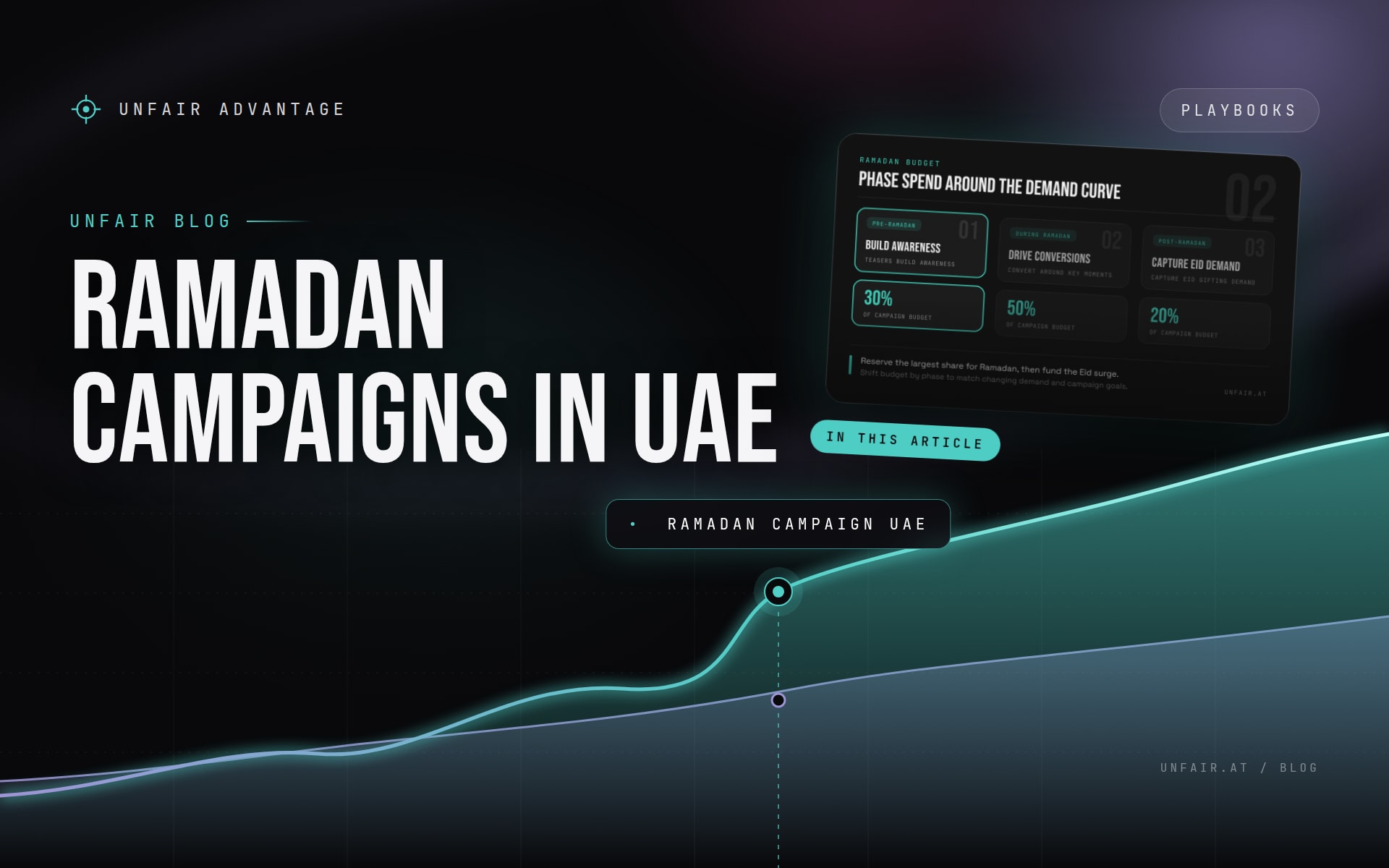
Budget phasing is critical. Pre-Ramadan (30% of budget) builds awareness with teasers and community engagement. During Ramadan (50%) focuses on conversions and engagement, leveraging iftar and suhoor moments. Post-Ramadan (20%) captures the Eid surge with gifting and luxury campaigns. Accounts like this typically reallocate budget dynamically to align with shifting consumer behavior during these phases.
But let’s break this down further. Pre-Ramadan isn’t just about teasers; it’s about education. Use this time to explain your product’s relevance to Ramadan. Are you selling meal kits? Show how they simplify iftar prep. Are you in fashion? Highlight modest, comfortable pieces for long days of fasting. During Ramadan, the focus shifts to urgency. Limited-time offers, flash sales, and countdown timers work wonders. Post-Ramadan is the grand finale. This is when gifting becomes king. Think luxury hampers, exclusive collections, and last-minute deals. Timing isn’t everything, it’s the only thing.
What Tone Works Best for a Ramadan Campaign?
Empathy beats salesmanship. Avoid overtly commercial messaging; instead, focus on community, inclusivity, and shared values. A campaign flop that went viral last year tried to sell sneakers with a ‘fast-paced Ramadan’ tagline. Rude. Instead, lean into storytelling and cultural relevance. As covered here, campaigns that highlight family, generosity, and reflection perform best.
Here’s the thing: Ramadan isn’t a sprint; it’s a marathon. People aren’t looking for a hard sell. They’re looking for connection. Think about the emotions tied to Ramadan, gratitude, spirituality, togetherness. Tap into those. For example, a grocery delivery service could highlight how they help families focus on what matters most: spending time together. A fashion brand could showcase how their pieces are designed for comfort during long days of fasting. The key is authenticity. If your ad feels like a pitch, you’ve already lost. If it feels like a story, you’re halfway there.
How Do You Daypart Around Iftar and Suhoor?
Dayparting is non-negotiable. Pre-iftar (late afternoon) is prime time for ads promoting meal kits or grocery delivery. Post-iftar (evening) works for entertainment and fashion. Suhoor-specific messaging should run late at night, targeting late-night shoppers. An analysis found that ads running at suhoor saw a 25% higher CTR than midday placements.
Let’s get practical. Pre-iftar is the golden hour. This is when people are finalizing their meal plans, think grocery delivery, meal kits, kitchen gadgets. Post-iftar is the wind-down. Families are together, scrolling through social media. This is the perfect time to showcase fashion, home decor, or entertainment options. Suhoor is the wild card. It’s late, it’s quiet, and it’s surprisingly effective. Use this time to promote convenience items like coffee, snacks, or breakfast kits. Timing isn’t just about when to run your ads, it’s about when to stop running them. Overlap is your enemy.
What Happens to Demand During Eid?
Eid is the peak. Gifting, fashion, and food delivery see higher demand compared to Ramadan. Luxury brands often run exclusive Eid collections, while e-commerce platforms push last-minute deals. Accounts like this typically see a significant portion of their revenue concentrated around Eid.
Here’s the twist: Eid isn’t just a shopping spree; it’s a cultural moment. Gifting is at the heart of it. Think about it, Eid is a time of generosity, of showing appreciation. That’s why luxury brands thrive here. Exclusive collections, limited-edition items, and premium packaging all play into the gifting narrative. But it’s not just about luxury. Even mid-tier brands can capitalize on this by offering gift sets or personalized options. The lesson? Think beyond the product. Think about the experience.
What Are the UAE-Specific Nuances?
The UAE’s multi-national audience means campaigns must balance Arabic and English messaging. Payment habits favor cash-on-delivery and cards over digital wallets during Ramadan. Delivery expectations are high, with same-day or next-day delivery often non-negotiable. See where your marketing leaks to ensure your logistics align with customer expectations.
Let’s dig deeper. The UAE’s diversity is both a blessing and a challenge. You’re not just targeting locals; you’re targeting expats from dozens of countries. This means your messaging needs to resonate across cultures. One effective strategy is to use bilingual campaigns, with Arabic and English messaging side by side. Payment preferences also vary. While digital wallets are gaining traction, cash-on-delivery remains popular during Ramadan. Why? Because people are cautious with their spending. They want to see the product before parting with their money. And let’s not forget delivery. In a city that never sleeps, ‘fast’ isn’t fast enough. It’s same-day or bust. The takeaway? Know your audience, and know your logistics.
How Do You Measure Success?
ROAS is a start, but not enough. Track incremental lifts in engagement, conversion rates, and customer lifetime value. Accounts like this typically see higher CLV for customers acquired during cultural or seasonal campaigns compared to other periods. Book a call to refine your measurement setup.
Here’s the deal: Ramadan isn’t just about immediate returns; it’s about long-term gains. Sure, ROAS is important, but it’s not the whole picture. Look at engagement metrics, how are people interacting with your ads? Are they clicking, sharing, commenting? Conversion rates are another key indicator. Are your campaigns driving sales, or just traffic? And don’t forget customer lifetime value. Ramadan customers aren’t just one-time buyers; they’re potential repeat customers. Accounts like this often see higher CLV for customers acquired during cultural campaigns compared to other periods. The lesson? Measure smarter, not harder.
The Unfair Bridge
Our approach to Ramadan campaigns includes a weekly optimization loop on GA4 data, focusing on striking-distance queries and CTR gaps. We run parallel test branches for creative angles, weighted by EWMA of clicks and conversions, so losing angles lose budget within weeks. Accounts using this method typically allocate a significant portion of their budget to the top-performing seasonal angle, driving higher efficiency.
Ramadan in the UAE isn’t just a campaign; it’s a cultural moment. Plan it right, and you’ll see results that last long after Eid.