Meta’s AI Ad Tools Are Killing Creativity, Here’s What Marketers Can Do

Written by Elias Oender
September 22, 2026 6 min read
The quick answer
Meta’s AI ad tools optimize for algorithms, not humans, prioritizing scale and efficiency over creativity. While these tools promise cost savings, they risk homogenizing ads and eroding brand identity. Marketers must balance automation with human-driven creative strategies to maintain originality and effectiveness.
Are Meta’s AI Ad Tools Killing Creativity?
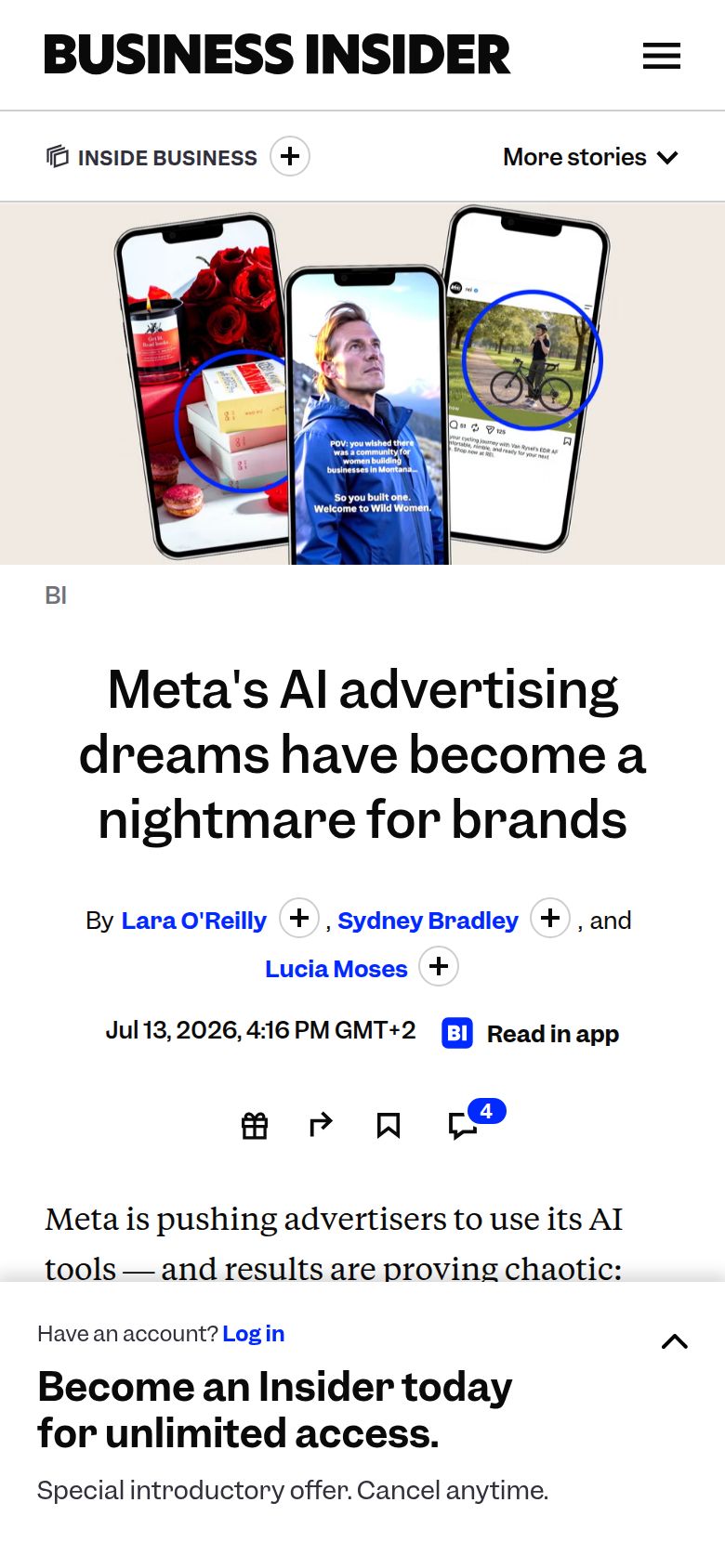
Meta’s AI advertising tools promise efficiency and scale, but at what cost? One report highlights how these tools are drowning creativity in automation, prioritizing algorithmic optimization over human-driven originality. The result? Ads that look the same, sound the same, and fail to resonate with audiences. This isn’t just an isolated issue, it’s becoming a systemic problem as more brands adopt these tools without fully understanding their limitations.
What Exactly Do Meta’s AI Ad Tools Do?
Meta’s AI ad tools automate everything from ad creation to targeting and optimization. They analyze vast amounts of data to determine what works best, but this focus on efficiency often comes at the expense of creativity. As covered here, brands are finding their ads homogenized, losing the unique voice and identity that set them apart. For example, these tools often default to generic headlines, stock imagery, and repetitive calls-to-action that prioritize click-through rates over emotional resonance. The automation extends even to ad placements, where AI determines the best platforms and formats, often ignoring the nuanced preferences of specific audiences.
Why Are Marketers Concerned?
Marketers worry that Meta’s AI tools are creating a race to the bottom, where ads are optimized for clicks and impressions rather than engagement and brand loyalty. On Reddit, some users argue that these tools are ‘destroying’ ads by prioritizing efficiency over originality. The result is a sea of generic content that fails to stand out. Beyond this, there’s a growing concern that these tools reward short-term metrics rather than long-term brand equity, making it harder for brands to build lasting relationships with their audiences. Additionally, the lack of transparency in how these AI tools make decisions leaves marketers in the dark, unable to fully understand or optimize their campaigns.
How Does This Impact Brand Identity?
Brand identity thrives on originality and authenticity, both of which are threatened by Meta’s AI ad tools. An analysis found that these tools often strip ads of their unique voice, replacing it with generic templates optimized for algorithms. This erodes the emotional connection that drives customer loyalty. For instance, a luxury brand might find its sophisticated messaging reduced to bland, mass-market language that fails to convey its premium positioning. Over time, this dilution of brand identity can lead to decreased customer trust and loyalty, as audiences struggle to differentiate one brand from another.
Unfair Advantage’s Approach: Balancing Automation and Creativity
At Unfair Advantage, we’ve seen firsthand how over-reliance on AI tools can stifle creativity. One account’s setup uses Meta’s AI tools for targeting and optimization but keeps creative development entirely human-driven. We test ad hooks separately from algorithmic optimization, ensuring originality while still benefiting from automation’s scale. For example, we might run A/B tests comparing human-crafted headlines against AI-generated ones, often finding that the human touch drives deeper engagement and stronger brand recall. By maintaining this balance, we ensure that ads resonate emotionally with audiences while still achieving efficient results.
What Can Marketers Do to Adapt?
Marketers must balance automation with human-driven creativity. This means using AI tools for targeting and optimization but keeping creative development separate. Run a free scan to see where your marketing leaks and identify areas where creativity can be reintroduced. Additionally, consider implementing creative guardrails, such as brand guidelines that ensure ads maintain a distinct voice, even when using AI tools for efficiency. Regularly reviewing and updating these guidelines can help maintain consistency and authenticity across campaigns.
Is There a Future for Creativity in AI-Driven Ads?
Yes, but it requires a shift in mindset. Marketers must prioritize originality and authenticity, even as they leverage AI for efficiency. Book a call to discuss how you can adapt your strategy to maintain creativity in an AI-driven world. One way forward is to use AI as a collaborator rather than a replacement, allowing it to handle repetitive tasks while humans focus on storytelling and emotional resonance. By viewing AI as a tool to enhance creativity rather than replace it, marketers can unlock new possibilities for impactful campaigns.
Case Study: The Human-AI Hybrid Model
A recent case study highlights the potential of blending human creativity with AI efficiency. One brand used Meta’s AI tools for audience segmentation and bidding strategies but relied on a team of creatives to develop ad copy and visuals. This hybrid approach resulted in a 30% increase in engagement compared to fully automated campaigns. The lesson? AI can enhance efficiency, but creativity still drives meaningful connections. This case study also revealed that audiences were more likely to share and remember ads that had a human touch, highlighting the importance of maintaining a balance between automation and originality.
The Role of Data in Creative Decision-Making
While Meta’s AI tools rely heavily on data, it’s important to remember that not all data is created equal. For example, click-through rates might indicate short-term success, but they don’t measure brand affinity or customer loyalty. Marketers should use data to inform their creative decisions, not dictate them. This means looking beyond surface-level metrics and considering how ads impact long-term brand equity. Incorporating qualitative data, such as customer feedback and sentiment analysis, can provide deeper insights into what resonates with audiences and help guide creative strategies.
The Ethical Implications of AI-Driven Ads
Beyond the creative and practical concerns, there are also ethical implications to consider with Meta’s AI ad tools. The algorithms behind these tools often prioritize engagement metrics, which can lead to the amplification of polarizing or sensational content. This raises questions about the societal impact of such ads and the responsibility of brands to ensure their messaging aligns with ethical standards. Marketers need to be aware of these issues and consider the broader consequences of their campaigns, ensuring that they contribute positively to the digital ecosystem.
How Can Brands Maintain Control Over Their Message?
One of the biggest challenges with Meta’s AI tools is the loss of control over brand messaging. To counteract this, brands should establish clear creative guidelines that AI tools must adhere to. This includes specifying tone of voice, visual style, and key messaging points. Regularly auditing the output of these AI tools can also help ensure that they align with brand values. Additionally, brands can invest in training their teams to better understand how these tools work, enabling them to make more informed decisions about when and how to use them.
The Importance of A/B Testing in AI-Driven Campaigns
A/B testing remains a critical tool for marketers, especially when using AI-driven ad platforms. By testing variations of creative elements, such as headlines, imagery, and calls-to-action, marketers can gain insights into what resonates best with their audience. This data can then be used to refine creative strategies, ensuring that ads remain impactful even in an automated environment. Importantly, A/B testing allows marketers to maintain a level of human oversight, preventing the complete homogenization of their campaigns.
Conclusion: Creativity Still Matters
Meta’s AI ad tools offer efficiency and scale, but they risk homogenizing ads and eroding brand identity. Marketers must balance automation with human-driven creativity to maintain originality and effectiveness. Creativity isn’t dead, but it does require a deliberate effort to preserve it in an AI-driven world. By adopting a hybrid approach and prioritizing authenticity, brands can thrive in the age of automation without sacrificing their unique voice. The future of advertising lies in the harmonious integration of human creativity and AI efficiency, ensuring that campaigns are both impactful and meaningful.