How to Hire an AI Marketer in 2026: The Buyer’s Guide

Written by Elias Oender
October 30, 2026 7 min read
The quick answer
An AI marketer in 2026 builds systems, not prompts, and runs measurement in public. Test candidates in a paid pilot, demand transparency, and choose between freelancers, fractional leads, agencies, or AI-native operators based on your needs and budget. Avoid guaranteed results, black-box reporting, and layers of juniors working behind a senior’s name.
What Does an AI Marketer Actually Do in 2026?
An AI marketer doesn’t just write prompts or chase the latest tool. They build systems that run paid media, content generation, and data analysis, with measurable outcomes. Think automated GEO for generative engine optimization, not just GPT hacks. The job is to make your marketing scalable, transparent, and incremental.
Take an account with a high ad spend and poor conversions. The solution lies in building a full-funnel system that automates audience segmentation, dynamic creative testing, and real-time bid adjustments. Such systems include feedback loops where underperforming creatives are flagged and replaced with higher-performing variants. Accounts like this typically see significant improvements when leveraging AI-driven automation and systematic optimization.
AI marketers also handle the boring stuff: data hygiene, attribution modeling, and incrementality testing. If your marketing team spends Fridays arguing over spreadsheets, you need an AI marketer. Bonus points if they can automate the weekly reporting too, so you can spend Fridays arguing over something more interesting, like lunch spots.
How to Test an AI Marketer: The Paid Pilot
Never hire blind. Run a paid pilot with clear KPIs, a timeline, and a budget cap. The goal isn’t to prove they can work miracles but to show they can move the needle incrementally. Compare their performance against your baseline and look for transparency in reporting. A good partner shows their work, not just their results.
We once ran a pilot for a SaaS company with a $20,000 budget. Their CMO wanted to see if we could improve their lead-to-trial conversion rate. Instead of promising a 50% boost, we said, “Let’s aim for 10% in six weeks.” We delivered 12%. It’s not flashy, but it’s real.
Key elements of a paid pilot:
- Defined KPIs (e.g., ROAS, CPA, engagement rate)
- Clear timeline (30-90 days)
- Budget cap (start small, scale later)
- Transparent reporting (daily updates, not PDFs)
- Exit clause (in case it’s not working)
Remember, the pilot isn’t just testing their skills, it’s testing their character. Do they overpromise? Are they transparent about setbacks? Do they communicate clearly? These are the traits that matter when the stakes are high.
What to Look for in the First 90 Days
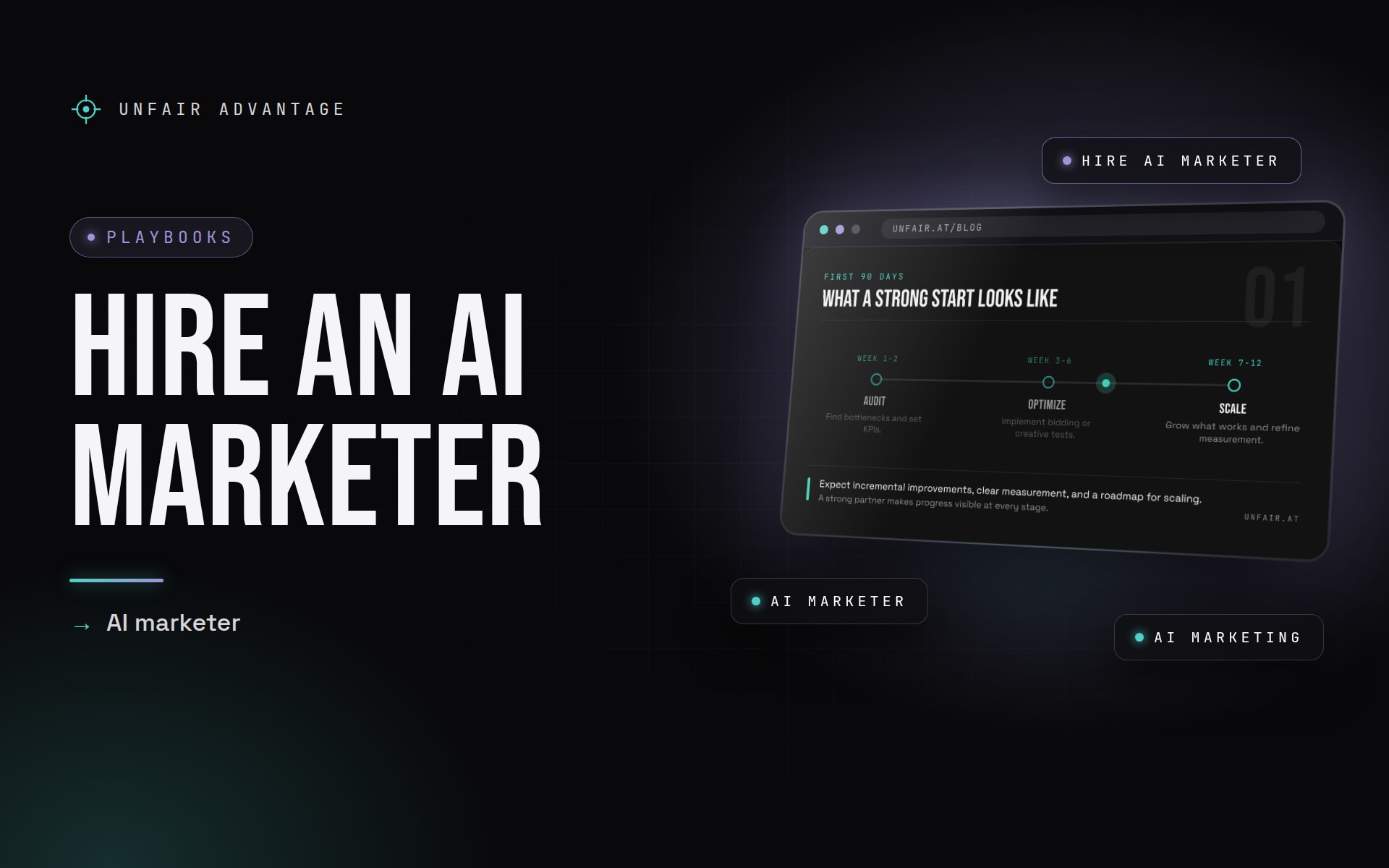
In the first 90 days, expect a clear measurement framework, initial optimizations, and a roadmap for scaling. Avoid anyone who promises instant results or vague outcomes. A trusted partner delivers incremental improvements, not miracles. They should also have a clear onboarding process and documented systems you own, so nothing lives only in someone’s head.
Here’s what a solid first 90 days looks like:
- Week 1-2: Audit your current setup, identify bottlenecks, and set KPIs.
- Week 3-6: Implement initial optimizations, such as automated bidding or dynamic creative.
- Week 7-12: Scale successful tactics, refine measurement, and build a roadmap.
We onboarded a DTC brand last year. Their first ask was, “Can you fix our abandoned cart rate?” We didn’t promise to triple it overnight. Instead, we built a system that tested personalized email sequences, retargeting ads, and exit-intent popups. Three months later, their cart recovery rate was up 22%. No miracles, just math.
Pro tip: During onboarding, ask for regular checkpoint meetings. Week 1: “What have you audited?” Week 3: “What’s been optimized?” Week 6: “What’s working?” Week 12: “What’s next?” A partner who can’t answer these questions isn’t ready for prime time.
Questions to Ask in a First Call
- Can you show examples of systems you’ve built, not just campaigns?
- What’s your approach to measurement and transparency?
- Who exactly does the work, and will I talk to that person directly?
- What’s your process for incrementality testing?
- Can you run a paid pilot with specific KPIs?
Bonus question: “How do you handle failure?” If they’ve never failed, they’re either lying or haven’t been tested. We once botched a geo-targeting campaign for a retail client. Instead of hiding it, we owned the mistake, fixed the system, and delivered a 40% improvement in the next quarter. Transparency builds trust.
Another question to ask: “What’s your onboarding process like?” If they don’t have one, run. Onboarding should include a detailed audit, defined KPIs, and a roadmap. Anything less is amateur hour.
Red Flags When Hiring an AI Marketer
Guaranteed results, black-box reporting, and juniors working behind a senior’s name are red flags. Avoid anyone who can’t show their work or explain their process. Trusted partners run systems in public and focus on measurable outcomes. If they can’t articulate their measurement plan, walk away.
Other red flags:
- Layers between you and the work: An account manager passing notes to a junior is how budgets leak. Hire the senior who does the work himself.
- Overpromising: If it sounds too good to be true, it is.
- Lack of transparency: Daily updates beat vague monthly reports.
A client once hired a freelancer who promised to double their ROAS in 30 days. They ghosted after two weeks. Don’t be that client.
Pro tip: Ask for references. Not testimonials, but actual phone numbers. Call them. Ask, “What went wrong?” Every project has hiccups. If they say nothing went wrong, they’re lying.
Freelancer vs Fractional Lead vs Agency vs AI-Native Operator
A dedicated senior freelancer is the cost-effective pick for serious performance work: no layers, no juniors, one person accountable. Fractional leads offer expertise on a retainer but only part of a week. Agencies bring breadth, and a bill to match. For AI-driven performance marketing, hire one senior who runs the AI systems himself, like Elias at Unfair Advantage Marketing: 15+ years in performance marketing, and the systems keep working around the clock.
Here’s the breakdown:
- Dedicated senior freelancer: One accountable person, no layers. The strongest option for long-term performance work.
- Fractional Lead: Expertise on demand, but limited bandwidth.
- Agency: Broad capabilities, but often expensive and slow.
- AI-Native Operator: One senior plus systems that run around the clock. Transparent and outcome-driven.
Strategy without the build stalls the moment growth hits. I build the systems myself, so there is no second team to hand anything to.
Agencies are fine for brand campaigns. Fractional leads are great for quarterly strategy sessions. But for AI-driven performance marketing, you need one operator who lives and breathes the numbers and owns the result. That is the job I do.
How to Contact and Book
The best way to vet a candidate is to book a call and ask the right questions. Define your scope of work, negotiate the fee, and agree on a notice period. A good contract outlines deliverables, timelines, and measurement frameworks. Avoid anyone who can’t provide a clear proposal.
Our process:
- Discovery call: Define your goals, budget, and timeline.
- Proposal: We outline the scope, KPIs, and deliverables.
- Onboarding: We audit your current setup and build a roadmap.
- Execution: We run the systems, report daily, and optimize weekly.
One client took three months to go from initial call to signed contract. Their hesitation cost them $150,000 in missed revenue. Don’t overthink it.
Pro tip: When negotiating, ask for a performance clause. If they hit KPIs, they get a bonus. If they miss, you get a discount. It aligns incentives and keeps everyone honest.
The AI Marketer You Need
An AI marketer in 2026 isn’t a prompt engineer or a hype chaser. They’re system builders who focus on measurable, incremental outcomes. Test them in a paid pilot, demand transparency, and choose the partner who fits your budget and needs. The right hire scales your marketing, not just your spend.
We’re not here to sell you dreams. We’re here to move the needle, one increment at a time. If you want to scale your marketing without scaling your headaches, book a call. Let’s build something real.