Google’s New Privacy Policy: AI Ads Goldmine or Privacy Minefield?

Written by Elias Oender
November 2, 2026 6 min read
The quick answer
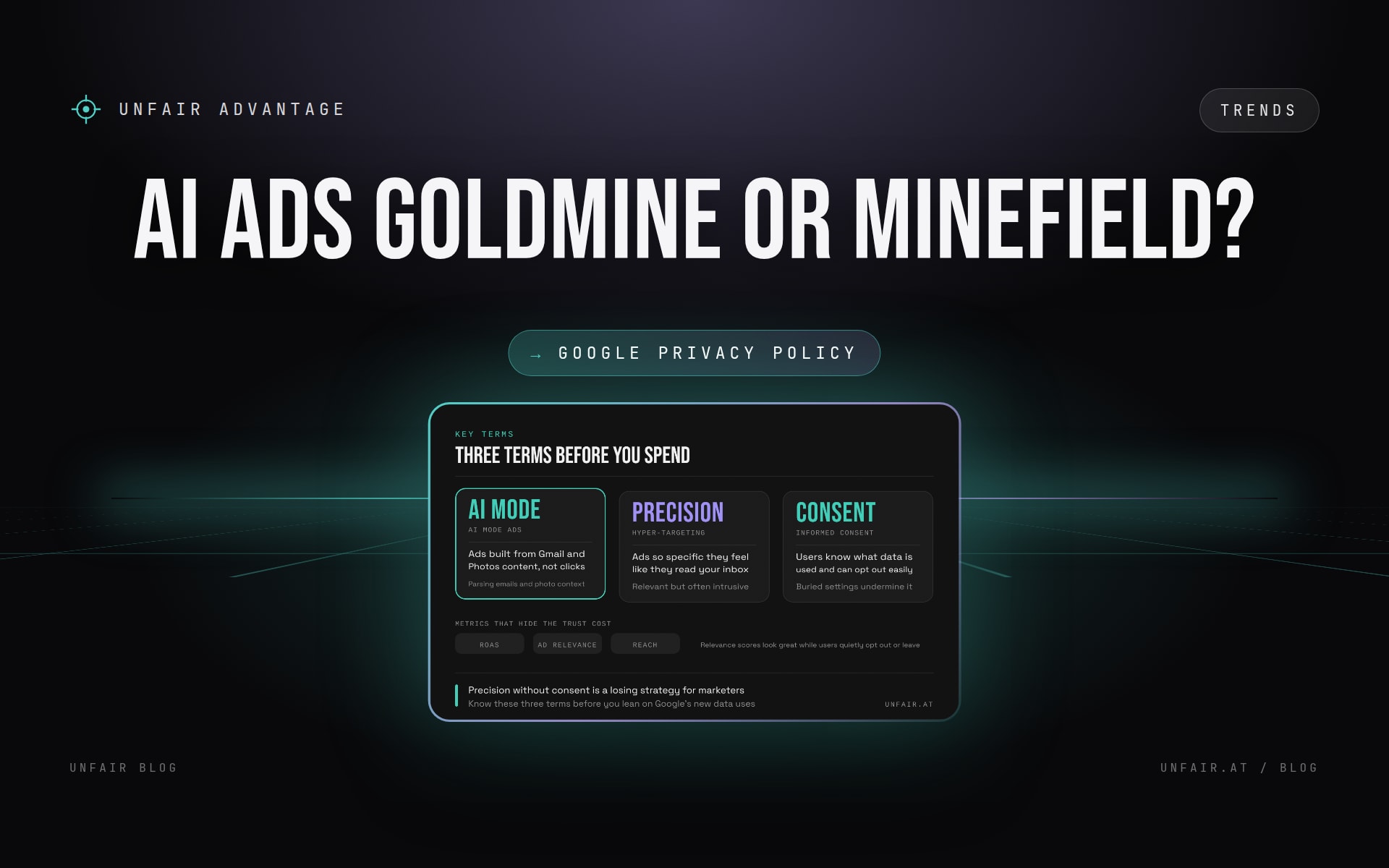
Google’s updated privacy policy allows AI Mode ads to use Gmail and Google Photos data. While this could refine targeting, it raises ethical and practical concerns about user privacy and backlash. Marketers must weigh the potential benefits against the risk of alienating users.
What does Google’s new privacy policy allow?
Google’s updated privacy policy quietly enables AI Mode ads to use data from Gmail and Google Photos. This means your inbox and photo library could shape the ads you see. While this might sound like a targeting breakthrough, it raises eyebrows about how personal your ads could get.
One analysis found that this move opens the door for ads to become hyper-personalized, leveraging information users may not expect to be used commercially. Google argues this data helps refine ad relevance, but is the trade-off worth it?
Here’s the kicker: Google’s AI Mode isn’t just skimming subject lines. It’s parsing the content of your emails, analyzing your attachments, and even interpreting the context of your photos. Think family vacation pics turning into hotel ads or work emails prompting SaaS pitches. Efficient? Sure. Creepy? Absolutely.
And let’s not forget: this isn’t just about ads. Once Google has this data, it’s fair game for other AI-driven features, think recommendations, search results, and even Maps suggestions. The line between ‘helpful’ and ‘stalker’ is thinner than a Google Pixel.
How does this affect marketers?
For marketers, this policy could be a goldmine. Imagine ads so precise they know you’re planning a vacation just from your Gmail threads. But before you celebrate, consider the backlash. Users might see this as a violation of trust, leading to opt-outs or worse, switching platforms altogether.
As covered in our piece on why marketing tools fail without context, precision without trust is a losing strategy. Marketers must weigh the potential benefits against the risk of alienating their audience.
Here’s the twist: even if users don’t opt out, they’ll likely develop banner blindness for ads that feel too personal. Ever had a friend casually mention something, and then, poof, it’s in your Instagram feed? Multiply that by a thousand, and you’ve got the psychological fatigue Google’s AI Mode could trigger.
And let’s talk about the data itself. Sure, Google’s AI is smart, but it’s not infallible. Misinterpretations happen. A photo of your dog could turn into pet food ads. A work email about layoffs could trigger LinkedIn Premium ads. Awkward.
Is this a privacy minefield?
Absolutely. Using Gmail and Google Photos data for ads feels invasive, especially when users aren’t explicitly informed. Reddit discussions highlight widespread discomfort with the idea of personal emails shaping ad content. This could lead to a privacy backlash, forcing Google to backtrack.
Moreover, as Quora notes, the policy’s vague language leaves room for interpretation, raising concerns about how far Google might go. Marketers should prepare for the possibility that this goldmine could explode.
Think about it: Google’s entire business model relies on balancing user trust with ad revenue. Push too far, and users might start migrating to alternatives like ProtonMail or DuckDuckGo. Even a small shift could have a ripple effect.
And then there’s regulation. Governments are already scrutinizing Big Tech’s data practices. This policy could be the tipping point for stricter privacy laws. Marketers who rely on hyper-targeted ads might find themselves navigating a minefield of compliance issues.
What are the ethical concerns?
The ethical concerns are clear: consent and transparency. Users might not realize their photos and emails are influencing ads, leading to a trust gap. Google’s argument that this data improves ad relevance doesn’t address whether users are comfortable with it.
As we’ve discussed in why ROAS is outdated in 2026, metrics like ad relevance shouldn’t come at the cost of user trust. Ethical marketing means respecting boundaries, even when the tech makes crossing them tempting.
Here’s the problem: Google’s opt-out process isn’t exactly user-friendly. Buried deep in settings, with vague descriptions and multiple steps, it’s designed to deter, not empower. This raises serious questions about informed consent. Are users truly aware of what they’re agreeing to?
And let’s not forget the broader implications. Normalizing this level of data usage sets a dangerous precedent. If Google gets away with it, who’s next? Facebook? Apple? Your smart fridge? Ethical marketing requires drawing lines, not erasing them.
Can this improve ad targeting?
Yes, but at what cost? AI Mode ads could become incredibly precise, using data like your travel plans or family photos to serve relevant ads. However, this precision comes with significant trade-offs. Users might find it creepy, leading to ad fatigue or platform abandonment.
As one report points out, the line between helpful and invasive is thin. Marketers must decide if the boost in targeting is worth the risk of alienating their audience.
Here’s the catch: precision doesn’t always equal effectiveness. An ad that’s too specific can feel intrusive, even if it’s relevant. Ever clicked on a product, only to have it haunt you across every platform for weeks? Now imagine that, but with personal emails and photos. Counterproductive.
And let’s talk about the data itself. AI isn’t perfect. Misinterpretations can lead to irrelevant, or worse, offensive, ads. A photo of a hospital visit could trigger health insurance ads. A casual email about a hobby could spawn a flood of niche product pitches. Annoying at best, damaging at worst.
What should marketers do next?
Marketers should tread carefully. While the potential for hyper-targeted ads is tempting, the backlash could be severe. Start by auditing your current ad strategies to ensure they respect user privacy. Tools like Unfair’s Ad Audit can help you identify leaks in your ad spend without crossing ethical lines.
Additionally, consider diversifying your ad platforms. Relying solely on Google’s ecosystem leaves you vulnerable to its policy changes. Explore alternatives that prioritize user trust, ensuring your marketing remains effective and ethical.
Here’s a pro tip: focus on first-party data. Build relationships with your audience through newsletters, loyalty programs, and community engagement. Not only is this data more reliable, but it’s also consensual. Bonus: you’re not at the mercy of Google’s next policy update.
And don’t forget to test. Run A/B campaigns comparing AI Mode ads with more traditional approaches. Measure not just clicks and conversions, but user sentiment. Are ads driving sales, or driving people away?
What’s the long-term impact?
This policy could reshape the digital advertising landscape, for better or worse. If users push back, Google might roll back its changes, setting a precedent for other platforms. If they don’t, we’re looking at a future where every email, photo, and search query is fair game for ads.
Marketers need to stay ahead of the curve. Invest in tools that balance precision with privacy. Educate your team on the ethical implications of data usage. And above all, prioritize user trust. Because once it’s gone, no amount of targeting can bring it back.
Conclusion
Google’s updated privacy policy is a double-edged sword. While it offers marketers unprecedented targeting capabilities, the ethical and practical concerns are significant. Balancing precision with privacy will be key to navigating this new landscape.
Ready to future-proof your ad strategy? Run a free scan to see where your marketing leaks.
Here’s the bottom line: in the race for relevance, don’t forget the human factor. Because no algorithm can replace trust, and no ad is worth losing it.