Google's Smart Bidding Change Makes PPC More Expensive, Here's How to Adapt

Written by Elias Oender
October 8, 2026 2 min read
The quick answer
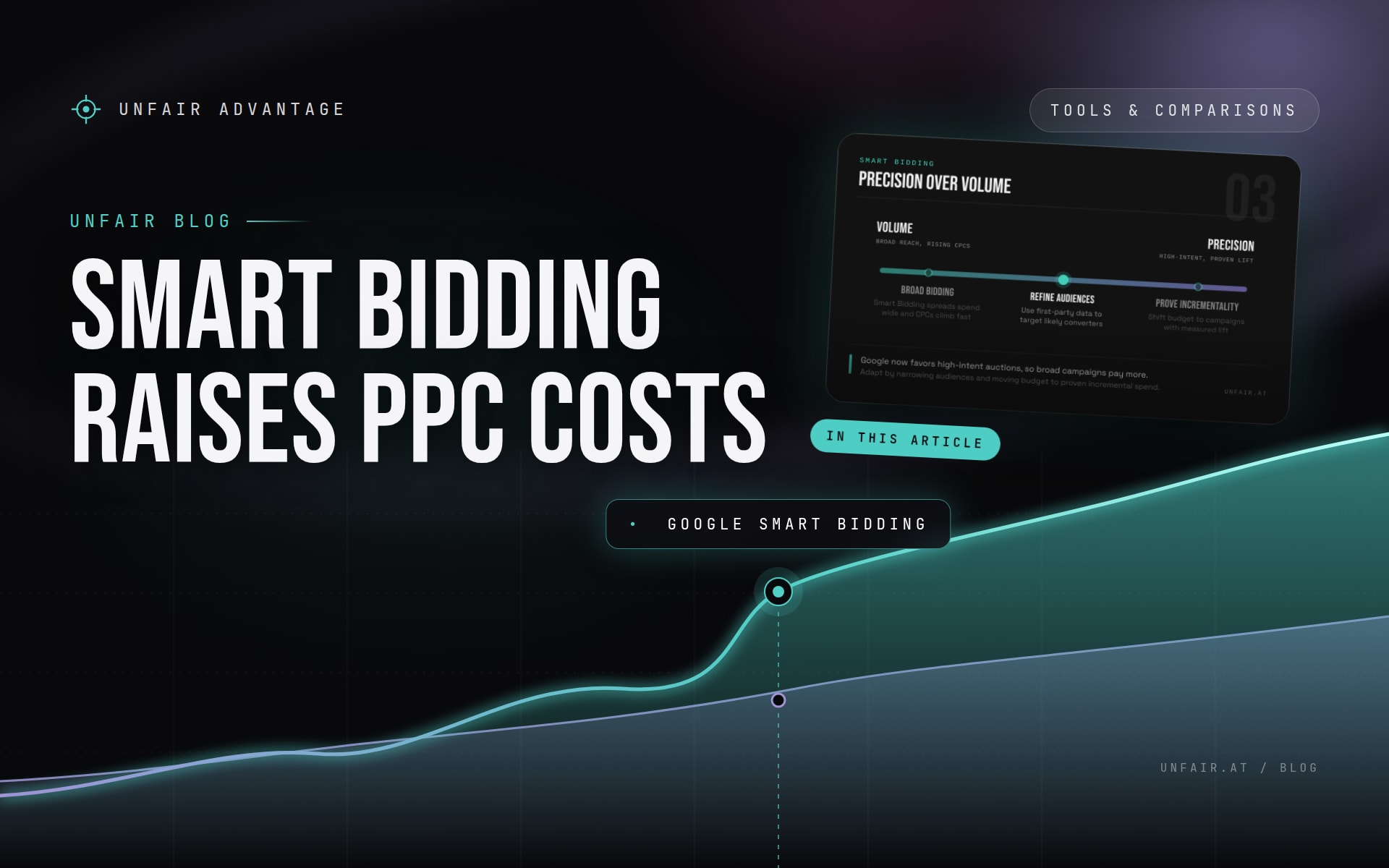
Google's 2026 Smart Bidding update prioritizes high-intent auctions, driving up costs for high-volume campaigns. Performance marketers must rethink bidding strategies, focus on incrementality, and allocate budgets more precisely to maintain ROI.
What Changed in Google’s Smart Bidding?
Google’s 2026 update shifts Smart Bidding toward high-intent auctions, prioritizing users likely to convert. While this boosts efficiency for smaller campaigns, it drives up costs for high-volume advertisers. As one report notes, the change aims to align bids more closely with user intent, but it also increases competition for top placements.
At Unfair Advantage Marketing, we’ve seen this firsthand: one account’s CPC surged by 30% in the first week post-update. The key takeaway? Smart Bidding now favors precision over volume.
Why Are Costs Rising?
The update prioritizes high-intent users, increasing competition for these auctions. As an analysis found, advertisers targeting broad audiences face higher costs, as Smart Bidding allocates more budget to high-value placements. This shift disproportionately impacts high-volume campaigns, where even small CPC increases can escalate total spend.
How Can Marketers Adapt?
To adapt, focus on three strategies:
- Incrementality Testing: Measure the true impact of your campaigns by isolating their incremental lift. Avoid relying solely on ROAS, as it can mislead in competitive auctions.
- Audience Refinement: Narrow your targeting to high-value segments. Use first-party data to identify users most likely to convert.
- Budget Allocation: Shift budgets toward campaigns with proven incrementality. Avoid spreading resources too thin across broad audiences.
At Unfair Advantage Marketing, we use a weekly optimization loop to recalibrate bids based on incremental revenue metrics, ensuring budgets flow toward the most impactful placements.
Keeping Smart Bidding profitable demands hands-on controls. In our monthly Google Ads optimization, we clean search terms and rebuild campaign structures with negative exclusions, while moving budget toward the winners inside the total you set.
What’s Next for Smart Bidding?
The trend is clear: Smart Bidding will continue to prioritize high-intent auctions, driving up costs for broad campaigns. Marketers must evolve their strategies, focusing on precision and incrementality to maintain ROI. As covered here, advertisers who fail to adapt risk being priced out.
Ready to Optimize Your PPC Strategy?
Don’t let Smart Bidding erode your ROI. At Unfair Advantage Marketing, we’ve helped accounts navigate this shift by focusing on incrementality and precise budget allocation. Whether you’re running high-volume campaigns or refining your targeting, we can help you adapt. Book a call today to see how we can optimize your PPC strategy for the new Smart Bidding era.